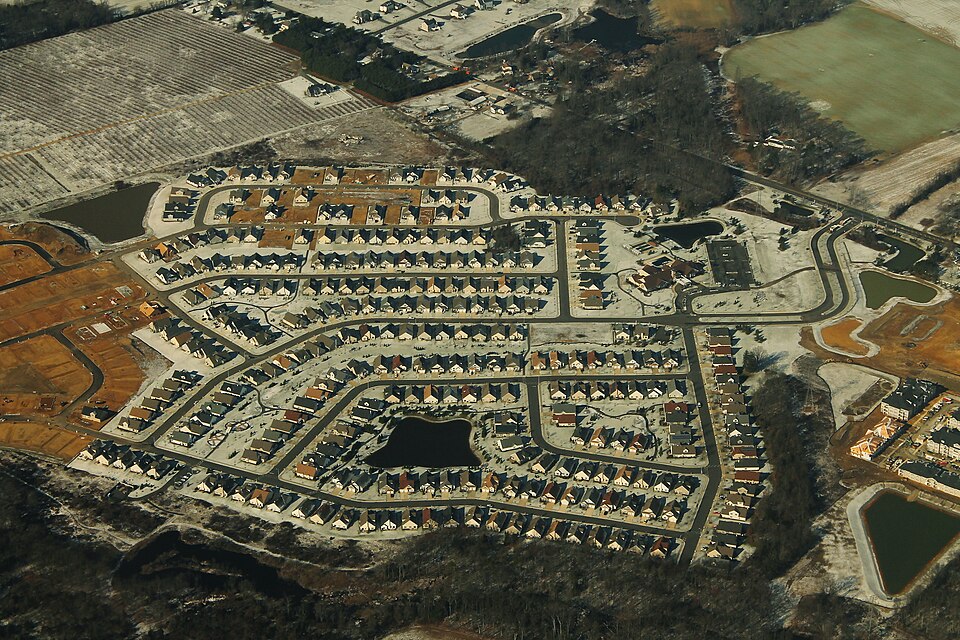
The 30-year mortgage climbs back above 7 percent
The Mortgage Bankers Association's rate reached 7.12 percent in the week to 18 September, its highest since May 2024; Lennar's orders fell 9 percent and KB Home's 12 percent in their quarters to August; existing homes sold at a 3.98 million yearly pace with the most supply since 2019, and Governor Barr put the housing shortfall at 2 million to 5.5 million homes. What the documents say, who they reach, where they disagree, and what settles it next.
What happened
The rate first. The Mortgage Bankers Association's average contract rate for a 30-year fixed mortgage with a conforming balance, the loan size the government-sponsored buyers accept, rose to 7.12 percent in the week to 18 September from 6.97 the week before, its highest since May 2024; applications fell 1.5 percent on the week, refinancing applications by about 3 percent and purchase applications by about 1 percent after seasonal adjustment, and adjustable-rate loans took 9.8 percent of all applications, the trade press reported from the association's survey. 'Mortgage rates vaulted higher last week,' said Mike Fratantoni, its chief economist. Freddie Mac's own weekly survey, taken a day earlier, put the 30-year at 6.95 percent on 17 September, up from 6.76 the week before and 6.26 a year earlier. [1, 2, 3]
The builders next, in their own filed words. KB Home reported on 22 September that revenues in its quarter to 31 August were down 20 percent to 1.30 billion dollars, homes delivered down 19 percent to 2,732, net orders down 12 percent to 2,604, monthly orders per community 3.1 against 3.8 a year earlier, the cancellation rate 18 percent against 17, and the housing gross margin 16.5 percent against 18.2; its backlog rose for the first time in four years, by 2 percent to 4,398 homes, and it spent 40 percent more on land in the quarter, 722.3 million dollars. 'We are operating in a housing market that continues to be challenging, with conditions weakening since our June earnings report,' said Jeffrey Mezger, its executive chairman. 'Higher mortgage interest rates have further pressured affordability and, together with geopolitical uncertainty and broader economic headwinds, have caused many prospective buyers to be more cautious on purchasing a home.' [4]
Lennar, the larger of the two, had said much the same six days earlier: net earnings of 284 million dollars, or 1.19 dollars a share, against 591 million a year earlier; new orders down 9 percent to 20,879 homes; deliveries down 3 percent to 20,840; a backlog of 16,857 homes worth 6.3 billion dollars; a gross margin on home sales of 15.8 percent. Its chief executive, Stuart Miller, said the environment 'has deteriorated since our last earnings call', that the 30-year rate was 'approximately 6.8 percent at quarter end and even higher since', and that consumer confidence had declined as rates and affordability slowed buyers' decisions; the company kept its volume, at a starts and sales pace of 4.1 homes a community a month across 1,713 communities, and cut its construction cost a square foot 6 percent on the year. [5]
And on the morning of 23 September a governor of the Federal Reserve, Michael Barr, gave a speech on the cost of shelter at a housing affordability conference at the Chicago Fed. 'By a variety of measures, high rents and high home prices, relative to income and savings, have made shelter increasingly unaffordable,' he said; homes were on average affordable from the crash of 2006 until the pandemic; estimates put the shortfall in the housing supply at roughly 2 million to 5.5 million units; and 'this combination of high prices and high rates puts homeownership out of reach for many families'. In the same speech he said that in his base case further policy adjustments, meaning higher rates, are likely to be needed to bring inflation to target, Reuters reported. [6, 7]
The record
The sales. Existing homes sold at a seasonally adjusted annual rate of 3.98 million in August, the National Association of Realtors reported on 10 September, down 2.0 percent on the month and 1.2 percent on the year; the homes for sale numbered 1.62 million, 4.9 months of supply at that pace and the most since November 2019; the median price was 429,100 dollars, up 1.6 percent on the year; a home took 31 days to sell; first-time buyers were 30 percent of sales and cash buyers 27 percent. 'Mortgage rates and home sales move in opposite directions,' said Lawrence Yun, its chief economist, 'so it's not surprising to see a mild dip in home buying activity due to high mortgage rates.' New homes sold at a 607,000 annual rate in July, the Census Bureau reported on 25 August, down 10.5 percent on the month inside a margin of plus or minus 14.0 points, with 488,000 for sale, 9.6 months of supply, and a median price of 393,800 dollars; August's figure is due on 24 September. [8, 9]
The construction. Housing starts ran at a 1,275,000 annual rate in August, the Census Bureau and the housing department reported on 17 September, 2.6 percent below July inside a margin of plus or minus 12.0 points, with single-family starts up 7.6 percent to 918,000 inside a margin of 14.0; permits were 1,394,000, down 2.7 percent on the month and up 3.5 percent on the year; completions fell to 1,128,000, 27.1 percent below a year earlier and well outside their margin of 8.9 points. The builders' own index from the National Association of Home Builders fell three points to 32 in September, with current sales at 35, expected sales at 37 and buyer traffic at 23; 38 percent of builders were cutting prices, by an average of 6 percent for the sixth month running, and 66 percent were offering incentives. [10, 11]
The rate's source. A 30-year mortgage is priced off the long Treasury yields, and Treasury's own daily curve put the ten-year at 5.11 percent at the close of 23 September, against 4.96 the day before and 5.05 on 17 September, when the desk's study of that day recorded the first closes above 5 percent since 2023. The Federal Open Market Committee had raised its target range to 3.75 to 4 percent on 16 September by twelve votes to none, saying inflation remains elevated, and sixteen of its eighteen participants placed the rate above that range at the end of the year, with a median inflation projection of 3.7 percent for 2026. Alberto Musalem of the St. Louis Fed told Reuters on 21 September that the rate was still 'on the accommodative side' and that 'earlier and incremental policy firming is better and less disruptive than later and larger and potentially more abrupt policy action'; Austan Goolsbee of the Chicago Fed said in London the same day that 'the only way to bring inflation down is to raise rates and narrow the gap between supply and demand', and that doing it quickly 'means pushing employment below target', the Associated Press reported. [12, 13, 14, 15, 16]
Who it reaches
Lennar and KB Home are direct: the figures above are their own, filed with the SEC, and each company's file on this site carries its record. D.R. Horton, PulteGroup, Toll Brothers, NVR and Meritage build for the same buyers, who borrow at the rates the association and Freddie Mac report, and Builders FirstSource supplies the lumber and components the single-family starts consume. Rocket and UWM write the mortgages the association's index counts. JPMorgan, Bank of America, Wells Fargo and U.S. Bancorp write and hold mortgages priced off the curve Treasury publishes, and AGNC and Annaly own the mortgage bonds whose value moves with it. The households in the documents are not on this site's record, but they are the ones the builders' cancellation rates and the association's application counts describe. [4, 5, 1, 3, 10, 12]
Where the sources disagree
On which rate is the rate. The association's 7.12 percent is the contract rate on conforming applications in the week to 18 September; Freddie Mac's 6.95 is its own survey in the week to 17 September; Lennar's 'approximately 6.8 percent' is the rate at 31 August 'and even higher since'. They are three measures on three dates and they climb in the order of their dates, so they agree on the direction and differ on the level; a reader should take each with its date. The Treasury curve behind all three rose 15 basis points on the ten-year in the single session of 23 September, after the association's week had closed. [1, 3, 5, 12]
On what the builders' figures mean. KB Home's orders fell 12 percent while its backlog rose for the first time in four years and it spent 40 percent more on land; Lennar's orders fell 9 percent while it held its volume and cut its cost a square foot, taking the margin down to 15.8 percent to do it; the home builders' association counted 38 percent of its members cutting prices. The same quarter can be read as a market that is weakening, which both executive chairmen said, or as builders choosing volume over margin into a shortage, which Lennar's Miller also said: 'housing shortages continue to drive demand'. The realtors' economist called August's fall in existing-home sales 'a mild dip'. [4, 5, 11, 8]
On supply against price. The realtors count the most existing homes for sale since 2019 and the Census Bureau 9.6 months of new-home supply, yet the median existing-home price was up 1.6 percent on the year and the new-home median stood at 393,800 dollars; Barr's speech names a shortfall of 2 million to 5.5 million units even as completions fell 27 percent on the year. More homes on the market and higher prices at once is the contradiction the documents leave open; the Census margins, printed on every line of its release, are wide enough that a single month's starts figure settles nothing, as the desk's story of 17 September said of August's. [8, 9, 6, 10]
What settles it next
The dated records to read. The Census Bureau's new-home sales for August, at ten in the morning on 24 September, and its September starts on 20 October, each with its margins; Freddie Mac's survey every Thursday and the association's every Wednesday, the next on 24 and 30 September; the realtors' September existing-home sales in October; the Federal Open Market Committee's meeting of 27 and 28 October, the next at which a rate decision is taken, and its December meeting with new projections; and the companies' own filings on EDGAR, where Lennar's fourth quarter and KB Home's follow their fiscal years and D.R. Horton, PulteGroup, Toll Brothers, NVR and Meritage report the quarter to September from late October. Each of these is a document with a date, not a forecast of this site. When the next study in this series is written, it opens with what those documents changed. [9, 10, 3, 1, 8, 17, 4, 5]
Sources
- HousingWire, As rates push past 7%, mortgage applications slip again, by Sarah Wolak, 23 September 2026 (the Mortgage Bankers Association's weekly applications , 2026-09-23
- Weekly Real Estate News, Mortgage applications fall as MBA rate jumps to 7.12%, highest since May 2024, by John G. Stevens, 23 September 2026, 2026-09-23
- Freddie Mac, Primary Mortgage Market Survey, 17 September 2026, 2026-09-17
- KB Home, Form 8-K exhibit 99.1, KB Home reports 2026 third quarter results, filed 22 September 2026, 2026-09-22
- Lennar Corporation, Form 8-K exhibit 99.1, Lennar reports third quarter 2026 results, filed 16 September 2026, 2026-09-16
- Federal Reserve Board, Governor Michael S. Barr, A Long-Term View on the Costs of Shelter, at Housing Affordability 2026, Federal Reserve Bank of Chicago, 23 Se, 2026-09-23
- Reuters via Yahoo Finance, Fed's Barr says further rate hikes will likely be needed, by Ann Saphir and Howard Schneider, 23 September 2026, 2026-09-23
- National Association of Realtors, NAR existing-home sales report shows 2.0% decrease in August, 10 September 2026, 2026-09-10
- U.S. Census Bureau and U.S. Department of Housing and Urban Development, Monthly New Residential Sales, July 2026 (release CB26-128, 25 August 2026; the August , 2026-08-25
- U.S. Census Bureau and U.S. Department of Housing and Urban Development, Monthly New Residential Construction, August 2026 (release CB26-147, 17 September 2026), 2026-09-17
- National Association of Home Builders, Eye On Housing: Builder sentiment falls on higher interest rates and costs, 16 September 2026 (the NAHB/Wells Fargo Housi, 2026-09-16
- U.S. Department of the Treasury, Daily Treasury Par Yield Curve Rates, 2026 (the rows for 17, 22 and 23 September 2026), 2026-09-23
- Federal Reserve Board, FOMC statement, 16 September 2026, 2026-09-16
- Federal Reserve Board, Summary of Economic Projections, 16 September 2026, 2026-09-16
- Reuters via Investing.com, Exclusive: Fed's Musalem says more rate hikes likely needed to quell inflation, by Howard Schneider, 21 September 2026, 2026-09-21
- Associated Press via WHIO, Austan Goolsbee warns the Fed may need higher unemployment to tame stubborn inflation, by Christopher Rugaber, 21 September 2026, 2026-09-21
- Federal Reserve Board, FOMC meeting calendars, the remaining 2026 meetings
Every stock is a company; the desk grades the company behind the stock. This article describes; it does not recommend. Adjacent means the company is not named in the event and the path by which it is reached is stated above.