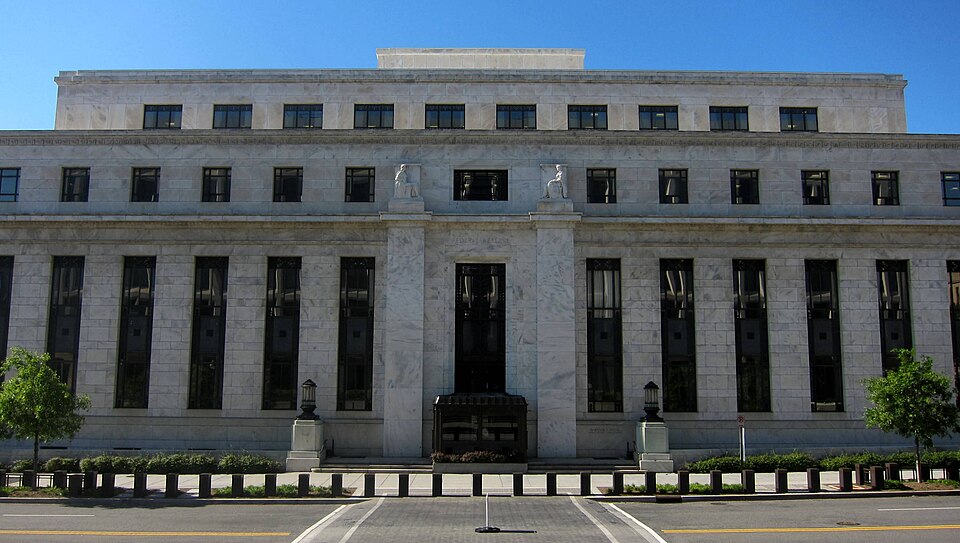
Ten-year sale clears at 5.30 percent, the highest since 2000
The Treasury sold $39 billion of ten-year notes on Wednesday 7 October at a high yield of 5.300 percent, the highest at a ten-year sale since 8 November 2000, with bids for 2.77 times the amount accepted and 2.5 percent of the notes to the primary dealers; the Fed's minutes of September said most officials judged another increase 'would likely be appropriate by year end', and the Treasury's table closed the thirty-year at 5.67 percent, its highest close since July 2001.
What changed since chapter seven
Chapter seven ended on Tuesday 6 October, with a three-year sale at a high yield of 4.932 percent and the Treasury's table closing the ten-year at 5.27 percent and the thirty-year at 5.64. On Wednesday 7 October the Treasury held the week's second sale: $39 billion more of the ten-year note first issued in August, a reopening, which means more of a security already outstanding, with the same interest of 4-5/8 percent a year and the same maturity, 15 August 2036. It cleared at a high yield of 5.300 percent, with bids for 2.77 times the amount accepted. In the Treasury's auction record no ten-year note sale had cleared at a higher yield since 8 November 2000, when the high yield was 5.865 percent. [1, 5, 8]
The Treasury's table for Wednesday moved the two ends of the curve apart. The longer maturities closed higher: ten-year 5.28 percent, from 5.27; twenty-year 5.71, from 5.68; thirty-year 5.67, from 5.64. The shorter ones closed lower: one-year 4.42, from 4.46; two-year 4.77, from 4.79; three-year 4.87, from 4.88. The five-year and seven-year were unchanged at 5.03 and 5.15. The table's highest ten-year close of the run is still Monday 5 October's 5.31 percent. [1]
At 2 p.m. the same day the Federal Reserve published the minutes of its meeting of 15 and 16 September, the written account of the discussion behind September's increase. They record that 'all participants supported raising the target range for the federal funds rate 1/4 percentage point to 3-3/4 to 4 percent', every participant and not only the twelve voters, and they say of the meetings to come: 'most participants assessed that another increase in the target range for the federal funds rate would likely be appropriate by year end.' The next sentence sets the condition: participants 'approached each meeting with an open mind and decisions at future meetings would depend on incoming information and its implications for the outlook and the balance of risks.' [10, 11, 20]
The record
The Treasury's result says who bought. Primary dealers, the New York Fed's trading counterparties, which it expects 'to bid on a pro-rata basis in all Treasury auctions at reasonably competitive prices', bidding for their own account tendered $52.9 billion and were awarded $984 million. Direct bidders, firms that are not primary dealers bidding for their own account, were awarded $6.6 billion, and indirect bidders, customers who bid through a dealer or a direct submitter, $31.1 billion, of $38.7 billion of competitive bids accepted. By the desk's arithmetic those are shares of 2.5 percent to the dealers, 17.1 to direct bidders and 80.3 to indirect bidders. The Treasury says of the last two categories that each 'does not indicate the domicile of the bidder (foreign or domestic)'. The sale is single-price: every winning bidder gets the price set by the highest yield accepted, 5.300 percent; half of the accepted competitive amount was bid at 5.255 percent or lower. [5, 6, 7]
Set against the same record, by the desk's arithmetic on the auctions query: at the September ten-year sale, on 9 September, the high yield was 4.834 percent, the bid-to-cover ratio 2.71, and the shares 79.2 percent indirect, 16.5 direct and 4.3 to the dealers. Over the twelve ten-year sales from October 2025 to September 2026, the ratio averaged 2.507 and ranged from 2.39 to 2.71; the indirect share averaged 71.5 percent, the direct 19.1 and the dealers 9.4. Wednesday's high yield was 46.6 basis points (a basis point is a hundredth of a percentage point) above September's, its ratio above every one of the twelve, and the dealers' 2.5 percent the smallest share they have taken at any ten-year note sale since May 2008, when the query begins to split the awards by bidder. [8, 5]
The minutes give the Fed's own reading of the climb before the meeting. The manager of the Fed's portfolio reported that 'nominal yields increased around 35 basis points across the 2- to 10-year segment of the yield curve', partly on the higher expected path of policy and strong data, and that market commentary also pointed to 'competition for capital from heavy private debt issuance to finance the development of artificial intelligence (AI) infrastructure as also contributing to higher term premiums and Treasury yields'. A term premium is the extra yield investors ask for holding a long bond instead of rolling over short ones. The staff found that 'changes in real rates contributed to most of the net increase in longer-maturity Treasury yields', real rates being yields after expected inflation. [10]
Inflation is the reason the minutes give for the increase. The staff estimated that prices for personal consumption, the Fed's preferred measure, were 3.8 percent higher in August than a year before, and 3.4 percent excluding energy and many food prices, and projected inflation to 'reach 2 percent in 2029'. Participants said they 'had not seen sufficient progress on lowering inflation in recent months', and 'several participants stated that they viewed the current policy rate as not restrictive or only mildly restrictive', meaning not high enough, in their view, to hold back spending much. [10]
Since the meeting the table has moved most at the long end. From Wednesday 16 September to Wednesday 7 October, by the desk's arithmetic, the ten-year went from 5.01 to 5.28 percent, 27 basis points; the thirty-year from 5.35 to 5.67, 32 basis points; and the two-year from 4.74 to 4.77, 3 basis points. The thirty-year's 5.67 is the table's highest close for that maturity since 11 July 2001, when it read 5.69, though the table carried no thirty-year from 18 February 2002 to 9 February 2006. The twenty-year's 5.71 is its highest close since 11 June 2002. [1, 2, 3, 4]
Who it reaches
The minutes single out housing. The staff found financing conditions 'somewhat restrictive for residential mortgage borrowers and small businesses' and that 'residential mortgage rates increased a bit more than 10-year Treasury yields' between meetings, and 'a few participants commented that housing was a sector in which financial conditions did not appear supportive of activity, with mortgage rates remaining at elevated levels.' Freddie Mac's latest survey, the weekly average on purchase applications, put the 30-year fixed rate at 7.28 percent as of 1 October, from 7.03 the week before and 6.34 a year earlier. [10, 13]
Mortgage real estate investment trusts hold mortgage bonds bought with borrowed money, and their reports for the quarter to 30 June estimate what instant, parallel moves in rates would do, hedges included. AGNC Investment, whose repurchase agreements, loans secured by its securities, 'typically have maturities of less than one year', estimated its tangible net book value per share 2.3 percent lower for rates a quarter point higher and 1.3 percent higher for a quarter point lower. Annaly, which says 'a significant portion of our investments are financed with repurchase agreements', estimated a quarter-point rise at 0.8 percent off its net asset value and 1.1 percent off twelve months of economic net interest income. The ten-year's 27 basis points since 16 September is about the size of those scenarios, but the move was not parallel: the two-year moved 3, by the desk's arithmetic. [14, 15, 1]
Builders and lenders meet the same yields through the mortgage. Lennar's report for the quarter to 31 August, filed on 2 October, says the 30-year fixed rate rose to approximately 7 percent in the quarter and the 10-year Treasury yield to approximately 5 percent, and that 'a significant portion of prospective buyers are finding it harder to qualify for a mortgage'; it continues 'to offer incentives intended to maintain volume and affordability'. Rocket Companies' report for the quarter to 30 June says elevated mortgage rates and affordability 'weighed on purchase and refinance activity', while the change in the modeled value of its servicing rights and related liabilities, the right to the fees it earns for handling borrowers' payments, was a $70 million increase in the quarter, a change it says was 'driven by an increase in interest rates' and mostly offset by hedges. [16, 17]
For a bank, the shape of the curve matters as much as its level. JPMorgan Chase's report for the quarter to 30 June estimates that long-term rates one point higher, short-term rates held, would add $1.1 billion to its net interest income and certain fees over twelve months. That is the shape the table has taken since the meeting: by the desk's arithmetic the ten-year stood 0.27 of a point above the two-year on 16 September and 0.51 on Wednesday 7 October, from 0.48 on Tuesday. [18, 1]
Where the sources disagree
On the level. Yahoo Finance reported that the ten-year 'rose as high as 5.36%, its highest level since April 2002' during Wednesday's trading and the thirty-year 'to a high of 5.73%, its highest level since May 2002', and that the thirty-year 'closed at 5.66%'. The Treasury's table, one reading for each day, closed the ten-year at 5.28 and the thirty-year at 5.67. A level touched in trading need not appear in the table, and the thirty-year's close differs by one basis point between the two. [19, 1]
On the next decision. Yahoo Finance reported that traders priced in 'roughly 17% odds of a rate hike at the Fed's October meeting next week'; the Fed's calendar puts that meeting on Tuesday 27 and Wednesday 28 October, three weeks after the minutes. Scripps News reported that investors were betting on a hold, and noted that the minutes predate the September jobs report of Friday 2 October, which it said showed 29,000 jobs added and unemployment at 4.2 percent, while the minutes record that 'a majority of participants assessed that the labor market had strengthened a bit recently.' [19, 11, 20, 10]
What settles it next
Thursday 8 October first. The Treasury sells $22 billion more of the thirty-year bond first issued in August, paying 5-1/8 percent and maturing on 15 August 2056, with competitive bids closing at 1 p.m. Eastern; it settles with the three-year and ten-year notes on Thursday 15 October. Freddie Mac's survey is released at noon the same Thursday and averages rates offered from Thursday 1 October through Wednesday 7 October, the week of chapter seven's and this chapter's tables. [9, 13]
Then the price data and the committee. The Bureau of Labor Statistics releases the consumer price index for September at 8:30 a.m. on Wednesday 14 October. The committee's next decision is scheduled for 2 p.m. on Wednesday 28 October, with a press conference at 2:30, and its minutes for 18 November; the meeting after is on 8 and 9 December. The minutes' own test is that decisions 'would depend on incoming information'. Chapter nine opens on the first of these records to move the table. [12, 11, 10]
Sources
- U.S. Treasury, Daily Treasury Par Yield Curve Rates, 2026 (the rows of 16 September and 5, 6 and 7 October, read from the year's CSV file), 2026-10-07
- U.S. Treasury, Daily Treasury Par Yield Curve Rates, 2001 (the thirty-year's row of 11 July 2001, read from the year's CSV file), 2001-07-11
- U.S. Treasury, Daily Treasury Par Yield Curve Rates, 2002 (the twenty-year's row of 11 June 2002, read from the year's CSV file), 2002-06-11
- Federal Reserve Board, H.15 Selected Interest Rates, release of 7 October 2026 (note on the thirty-year constant maturity series, discontinued 18 February 2002 , 2026-10-07
- TreasuryDirect, Treasury Auction Results, 9-Year 10-Month Note, CUSIP 91282CRF0 (7 October 2026), 2026-10-07
- TreasuryDirect, Auction FAQs (single-price auctions; direct and indirect bidders), 2026-10-08
- Federal Reserve Bank of New York, Primary Dealers (what the New York Fed expects of its primary dealers), 2026-10-08
- U.S. Treasury, Fiscal Data, auctions query: every nominal ten-year note sale since 1990 (high yield, bid-to-cover, awards by bidder class), 2026-10-08
- U.S. Treasury, Fiscal Data, auctions query: the sales of 6, 7 and 8 October 2026 (amounts, coupons, closing times, issue dates), 2026-10-08
- Federal Reserve, Minutes of the Federal Open Market Committee, September 15 to 16, 2026 (released 7 October 2026), 2026-10-07
- Federal Reserve Board, calendar of events, data file (minutes at 2:00 p.m. on 7 October; the October 27 to 28 meeting and press conference; minutes on 18 Novemb, 2026-10-08
- U.S. Bureau of Labor Statistics, Consumer Price Index release schedule, 2026, 2026-10-08
- Freddie Mac, Primary Mortgage Market Survey, 1 October 2026, 2026-10-01
- AGNC Investment Corp., Form 10-Q for the quarter ended 30 June 2026, 2026-07-31
- Annaly Capital Management, Form 10-Q for the quarter ended 30 June 2026, 2026-07-29
- Lennar Corporation, Form 10-Q for the quarter ended 31 August 2026, 2026-10-02
- Rocket Companies, Form 10-Q for the quarter ended 30 June 2026, 2026-08-07
- JPMorgan Chase & Co., Form 10-Q for the quarter ended 30 June 2026 (earnings-at-risk), 2026-08-06
- Yahoo Finance, Stock market today: Dow falls, S&P 500 and Nasdaq retreat from records amid bond market jitters, by Grace O'Donnell, David Hollerith and Ines Fer, 2026-10-07
- Scripps News via WCPO, Fed minutes show most officials expected another rate hike before year's end (Wednesday 7 October), 2026-10-07
Every stock is a company; the desk grades the company behind the stock. This article describes; it does not recommend. Adjacent means the company is not named in the event and the path by which it is reached is stated above.