The ten-year closes at 5.24 percent, its highest since June 2007
Treasury's own table for Monday puts every maturity from two years out at a level last closed above in July 2007, May 2004 or January 2002; Governor Cook said the pressure comes 'from the AI buildout' and 'the pass-through of higher oil prices' and that total inflation ran 3.8 percent in the year to August, almost double the 2 percent the Fed aims for; the reporting ties the day's selling to the rejection of Iran's Hormuz plan; the builders' and lenders' own filings already carry the cost, and the next documents are Friday's jobs report and three auctions in the week of 6 October.
What changed since chapter two
Chapter two closed on Friday's table. Monday's, published by the Treasury on the evening of 28 September, reads: two-year 4.92 percent, three-year 5.01, five-year 5.06, seven-year 5.15, ten-year 5.24, twenty-year 5.60, thirty-year 5.56. On Friday the same row read 4.81, 4.94, 4.98, 5.06, 5.17, 5.54 and 5.49, so every maturity from two years out rose between six and eleven hundredths of a point in one session. [1, 15]
The Treasury's own back tables say how far back each level reaches. The ten-year's last close at or above 5.24 was 12 June 2007, at 5.26, the highest close of that year; the seven-year's last at or above 5.15 was 14 June 2007; the five-year's at or above 5.06 was 9 July 2007; the two-year's at or above 4.92 was 13 July 2007. The twenty-year's last close at or above 5.60 was 13 May 2004, at 5.61. The thirty-year's last at or above 5.56 was 4 January 2002, at 5.57; the Treasury issued no thirty-year bond from 2002 until February 2006, and no close of 2006 or 2007 reached 5.36. [2, 3, 4, 1]
The reporting tied the day's selling to the weekend. Yahoo Finance's market page, by Grace O'Donnell and Ines Ferre, reported that the ten-year 'climbed 6 basis points to 5.24%, its highest level since 2007' and the thirty-year 'rose to 5.56%', that the Dow fell 0.7 percent, the S&P 500 about 0.8 and the Nasdaq 0.9, and that the move followed President Trump's rejection of Tehran's proposal to reopen the Strait of Hormuz and a rise in oil. It quoted Goldman Sachs's Ben Snider: 'One reason for the decline in valuations is the rise in interest rates.' CBS News's live page carried an Associated Press entry at 3:27 in the afternoon on the bond market's uncertainty over the strait. [6, 7]
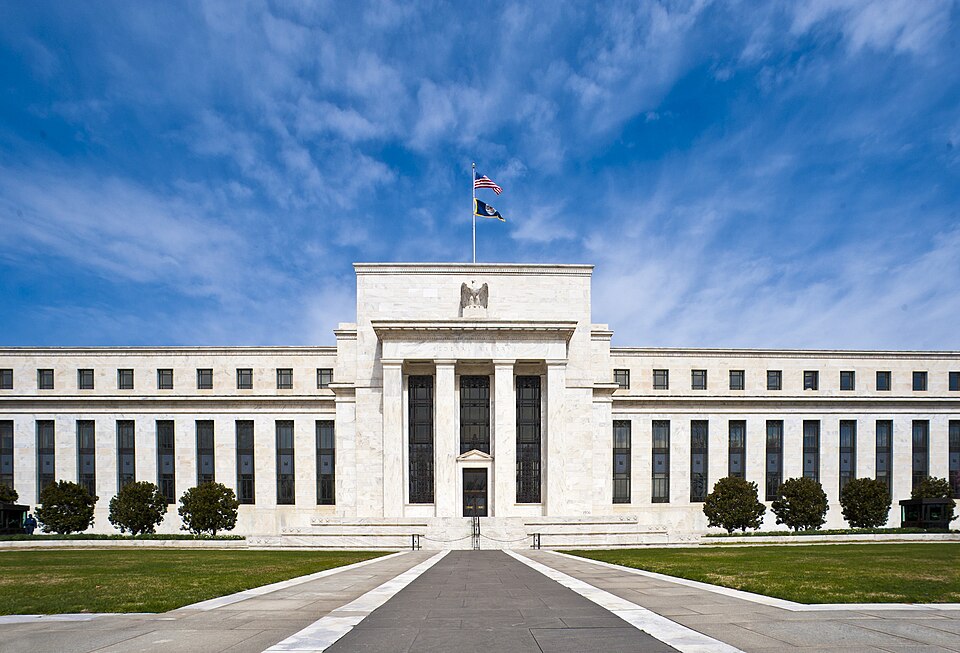
The Fed spoke the same day, in Oakland. Governor Lisa Cook, in a speech on artificial intelligence and the economy, said: 'I voted along with the rest of the FOMC to raise rates 25 basis points at the recent September meeting.' She said total inflation 'rose an estimated 3.8 percent in the 12 months leading into August', almost double the 2 percent the Fed aims for, that electricity and water costs 'are each up around 5 percent over the past year, potentially attributable in part to AI', and: 'I expect to see continued pressure on inflation from the AI buildout ... and from the pass-through of higher oil prices.' On what comes next: 'the number and magnitude of any future adjustments will be informed by observations of the economy's reaction to our policy actions.' [5]
The record
The decision Cook voted for is the statement of 16 September: 'The Committee decided to raise the target range for the federal funds rate by 1/4 percentage point to 3-3/4 to 4 percent', by twelve votes to none, with the sentences 'Inflation remains elevated. Today's policy action will support a timelier return to the Committee's 2 percent goal.' Chapter two carried the Fed voices that followed, Paulson's 'some modest further tightening may be warranted' and Williams's 'reasonable'. [8, 15]
The mortgage is the channel the curve reaches households by. Freddie Mac's survey of 24 September put the thirty-year fixed rate at 7.03 percent, from 6.95 the week before, and the fifteen-year at 6.42, from 6.26; its chief economist wrote that 'the housing market remains supported by a solid labor market and an economy that is growing at a healthy rate'. The next survey is Thursday's. [9]
The builders' own words are in their filings. Lennar's results release of 16 September, in the words of Stuart Miller, its executive chairman and chief executive: 'Mortgage rates increased through the quarter, with the 30-year rate at approximately 6.8% at quarter end and even higher since.' And: 'Rates are responding as inflation remains above the Fed's target, driven by geopolitical tension and higher oil prices.' And: 'Consumer confidence has declined as rates and affordability have driven more consumers to slow their purchase decision.' The release puts its average sales price at 372,000 dollars 'reflecting approximately 12.0% in incentives, along with base price adjustments necessary to sustain volume in a market where affordability remains the defining constraint'. [10]
PulteGroup's quarterly report of 22 July says: 'Demand conditions remained challenging through the second quarter of 2026 as the result of elevated mortgage interest rates, higher housing costs, and general economic uncertainty. Volatility in geopolitical conditions, in part due to tensions in the Middle East, has also negatively impacted inflation and interest rates, further weakening consumer confidence.' Its mortgage arm was borrowing under its repurchase agreement at a weighted average of 5.42 percent at 30 June. D.R. Horton's report of the next day carries its own costs: 500 million dollars drawn on its homebuilding facility at 4.5 percent, 820 million on its rental facility at 5.4 percent, and 1.5 billion on its mortgage repurchase facility at 5.6 percent, all at 30 June. [11, 14]
The lender's filing says the same from the other side. Rocket's quarterly report of 7 August: 'in its June Summary of Economic Projections, the Federal Reserve raised its projections for inflation and the 2026 year-end federal funds rate. The 10-year Treasury yield increased during the quarter, while the 30-year fixed mortgage rate remained elevated and volatile, declining in April before increasing in May and remaining near 6.5% through the end of the quarter.' The weighted average rate on its senior notes was 5.43 percent at 30 June, from 5.03 at the end of 2025. [12]
The cost of money reached a borrower outside the mortgage the week before. Reuters reported on 23 and 24 September that SoftBank raised 11.1 billion dollars in the largest high-yield corporate bond sale on record, in three dollar tranches at 8.625, 9.25 and 9.75 percent and two euro tranches at 7.125 and 8 percent, to fund the last of its commitment to OpenAI; Fitch's Satoru Aoyama was 'positively surprised by the market appetite', and CreditSights' Mark Chapman said the risks 'are material and have increased'. [13]
Who it reaches
The same thirteen filers as chapter two, none of which filed anything on Monday: the builders, whose own reports now say in their own words what the rates did to demand and incentives; the mortgage lenders, whose volume follows the rate Freddie Mac surveys; the banks, whose lending margin the curve sets; and the mortgage real estate investment trusts, whose holdings are priced off it. The paths are stated beside each name; none of the filings read here names a company's share price, and this chapter prints none. [10, 11, 12, 14, 9]
Where the sources disagree
On the thirty-year's history: Yahoo Finance wrote that its 5.56 was 'its highest level since 2004'. The Treasury's own tables put the thirty-year's last close at or above 5.56 on 4 January 2002 and the twenty-year's last at or above 5.60 on 13 May 2004, so the 2004 date belongs to the twenty-year on the record; the difference may be one of intraday trading against closes, which this series does not read. [6, 4, 3, 1]
On the cause: the market reporting names Iran and oil, the governor names the AI buildout and the pass-through of oil, and the strategist names rates themselves for what they did to valuations. The three are not exclusive, and the record here carries each as its source said it. [6, 5]
What settles it next
Chapter two's calendar stands: the personal income and outlays and GDP releases on Wednesday 30 September, Freddie Mac's survey on Thursday, and the employment report for September at 8:30 on Friday 2 October. After it come the auctions: a three-year note on 6 October, a ten-year note on the 7th and a thirty-year bond on the 8th, all issued on the 15th, the first sales of those maturities since the rise. The Fed meets on 27 and 28 October without projections and on 8 and 9 December with them. Chapter four opens on the first of these to move the table. [15, 16, 17, 18, 9]
Sources
- U.S. Treasury, Daily Treasury Par Yield Curve Rates, 2026, 2026-09-28
- U.S. Treasury, Daily Treasury Par Yield Curve Rates, 2007 (the ten-year's last close at or above 5.24, the seven-year's above 5.15, the five-year's above 5.06 a, 2007-12-31
- U.S. Treasury, Daily Treasury Par Yield Curve Rates, 2004 (the twenty-year's last close at or above 5.60), 2004-12-31
- U.S. Treasury, Daily Treasury Par Yield Curve Rates, 2002 (the thirty-year's last close at or above 5.56), 2002-12-31
- Federal Reserve, Governor Lisa D. Cook, An Update on AI and the Economy, remarks at the Oakland Tech Week opening keynote, 2026-09-28
- Yahoo Finance, Stock market today: Dow, S&P 500, Nasdaq fall as Treasury yields jump, by Grace O'Donnell and Ines Ferre, 2026-09-28
- CBS News, live updates on the Iran war and the Strait of Hormuz talks (the Associated Press entries of 28 September), 2026-09-28
- Federal Reserve, FOMC statement, 16 September 2026, 2026-09-16
- Freddie Mac, Primary Mortgage Market Survey, 24 September 2026, 2026-09-24
- Lennar Corporation, results for the third quarter of 2026, exhibit 99.1 to the current report of 16 September 2026, 2026-09-16
- PulteGroup, quarterly report on Form 10-Q for the quarter ended 30 June 2026, 2026-07-22
- Rocket Companies, quarterly report on Form 10-Q for the quarter ended 30 June 2026, 2026-08-07
- Reuters via KSL, SoftBank raising $11.1 billion in world's biggest high-yield corporate bond sale for OpenAI financing push, by Anton Bridge with Yoruk Bahceli, 2026-09-24
- D.R. Horton, quarterly report on Form 10-Q for the quarter ended 30 June 2026, 2026-07-23
- CrossAssetData, The cost of money, chapter two (the series' previous chapter, with Friday's table and the week's auctions), 2026-09-27
- Bureau of Labor Statistics, Employment Situation release schedule, 2026, 2026-09-28
- TreasuryDirect, upcoming auctions (the 3-year note, the 9-year 10-month note and the 29-year 10-month bond of 6, 7 and 8 October), 2026-09-28
- Federal Reserve, FOMC meeting calendars, 2026, 2026-09-28
Every stock is a company; the desk grades the company behind the stock. This article describes; it does not recommend. Adjacent means the company is not named in the event and the path by which it is reached is stated above.