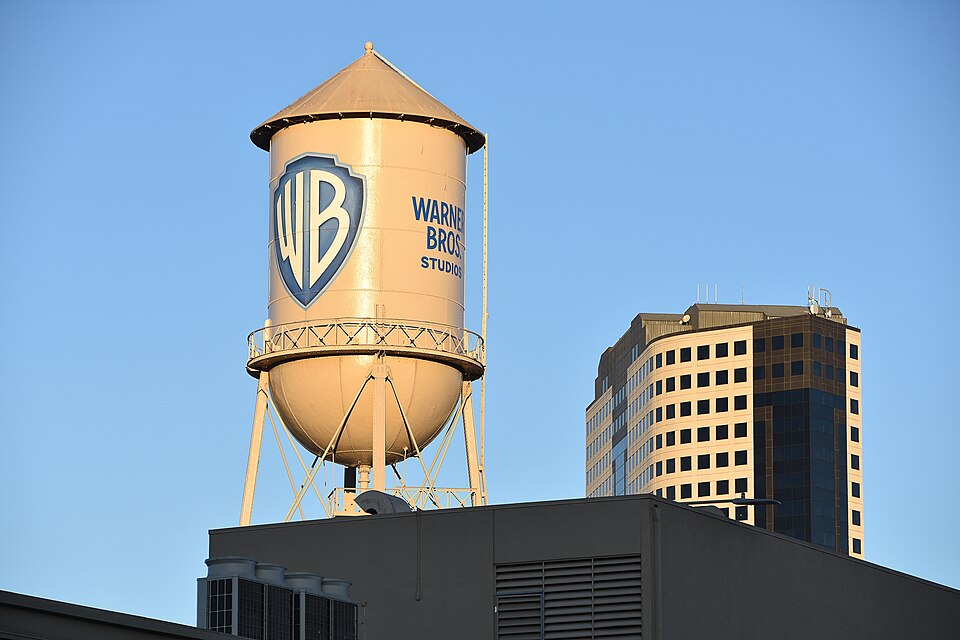
Paramount is cleared to buy Warner Bros., with five years of strings
A federal judge entered the consent decree with twelve states on 30 September, resolving the lawsuit that sought to block an acquisition Paramount's own statements price at $78.0 billion in cash for Warner Bros. Discovery's shareholders: at least 30 films a year, each in theaters for 45 days, separate cable negotiations, a board over CBS News and CNN, and the forced sale of Miramax or six cable channels for a breach; $44.4 billion of notes are on offer to pay for it, and the companies expect to close on 6 October.
What the court did
On Wednesday 30 September the United States District Court for the Northern District of California entered a consent decree between Paramount Skydance, Warner Bros. Discovery and twelve states, Paramount told the Securities and Exchange Commission the same day. A consent decree is a settlement that a court makes into its own order, so that breaking it can be punished by the court. The order resolved the states' lawsuit, which had sought to block the merger under Section 7 of the Clayton Act, and changed the earlier order that had barred the companies from closing. [1]
The Associated Press reported that Judge Araceli Martínez-Olguín ruled the decree a 'fair, reasonable, and good faith approach to address the competitive harms' the states alleged, and that hopes for terms that went further 'do not rise to the level of legal violations upon which the Court can reject the parties' negotiated resolution'. She had heard critics of the settlement first, the AP reported, and had told a hearing that the court is not a 'rubber stamp'. The companies now expect to complete the deal on 6 October. [2]
The states settled on Monday 21 September. California's attorney general, Rob Bonta, who led them, said that day: 'Let me be clear: This settlement is not a vote of support for this merger.' The federal government had already let the deal through: the AP reported that the Justice Department cleared it, and Agence France-Presse reported that the Trump administration approved it in June 'without demanding a change to its business'. [3, 2, 4]
What Paramount promised
The commitments run for five years. The combined company must release in the United States at least 30 films in each of the first two years and 32 in each of the next three; at least 20 of them, then 21, must be wide releases, on 2,000 screens or more, and at least four a year must be independent films. Each film counted must play in theaters for at least 45 days and may not appear on a subscription streaming service until at least 90 days after it opens. [1]
The penalties are written down. For each film by which the company falls short of the yearly minimum it must contribute $30 million, half of it to the entertainment industry's health and retirement funds. A failure to meet the film commitments, after a six-month period to cure it, 'requires divestiture of Miramax Studios'. An uncured material breach of the cable terms requires the sale of six channels: BET, VH1, Comedy Central, Smithsonian, Destination America and Science. [1]
The cable terms say the company must negotiate carriage for Paramount's basic cable channels and for Warner's separately, without making one set of terms depend on the other. It must spend at least $300 million a year more on production in the United States than the two companies spent together in 2025, which is $1.5 billion over the period, and it may not sell or close the Paramount or the Warner Bros. studio lot. Within 180 days of closing it must set up a five-member board of established journalists to settle specified editorial disputes at CBS News and CNN. It must keep Pluto TV, or a replacement for it, free to watch. A separate settlement with the Writers Guild of America adds $17.5 million for the guild's health fund. [1]
Paramount's report says the decree 'does not constitute an admission' that any antitrust law was broken, and that the company 'does not expect' the decree or the guild settlement 'to have a material impact on its ability to achieve its previously announced synergy and leverage targets'. The Associated Press counted a further $47.5 million over five years for training workers displaced by the merger, which the report gives as $9.5 million a year. [1, 2]
What it costs
Paramount's pro forma statements, which show the two companies as if already combined and were furnished on 28 September, estimate the cash payable to Warner Bros. Discovery's shareholders at $78.0 billion, on the assumption of a closing on 6 October, plus about $1.1 billion for employees' vested stock awards. The Associated Press puts the merger at $81 billion, and at about $111 billion with debt included. [5, 2]
The money comes from new stock and new debt. The statements describe up to $46.7 billion of Paramount stock sold to affiliates of the Lawrence J. Ellison Revocable Trust and $250.0 million to a RedBird Capital fund; Agence France-Presse reported that Larry Ellison, the founder of Oracle and the father of Paramount's chief executive, David Ellison, 'provided major funding and a guarantee to lenders backing the deal'. On 28 September Paramount said it intends to offer approximately $44.4 billion of secured notes in dollars and euros, with a $49.0 billion bridge loan of 364 days committed in case permanent financing is not in place at closing. On the pro forma balance sheet for 30 June the combined company carries $80.28 billion of long-term debt. [5, 6, 4]
The same pages record what the contest for Warner cost. Paramount 'paid the termination fee of $2.8 billion' due to Netflix under Warner Bros. Discovery's merger agreement with Netflix, as amended and restated on 19 January, which was ended before Paramount's own agreement of 27 February. Agence France-Presse described it as a bidding war that Paramount won. [5, 1, 4]
Who runs it
Mattel told the SEC on Wednesday that its chief executive and chairman, Ynon Kreiz, resigned on 29 September, effective 2 October, and that a director, Roger Lynch, will succeed him in both posts. The Associated Press reported that shortly after the ruling Paramount announced Kreiz will join as co-chief executive alongside David Ellison; Agence France-Presse reported that he joins on 5 October and takes a board seat at closing. [8, 2, 4]
What settles it next
Monday 5 October is the record date for a distribution of about 470 million warrants to Paramount's Class B shareholders, other than a list of restricted holders that includes the Ellisons and RedBird, which the company says is contingent on the closing and expects to make on about 13 October. Tuesday 6 October is the day the companies expect to close and the day Paramount's stock is due to begin trading on the New York Stock Exchange in place of Nasdaq. The notes offering has still to be completed; Paramount says its completion is not a condition of the acquisition. After closing comes the decree's own clock: semiannual reporting under an independent monitoring trustee, and a film count each year for five years. [7, 6, 5, 1]
Who it reaches
Paramount Skydance and Warner Bros. Discovery directly. Mattel, which loses its chief executive to the combined company. Netflix, the party to the agreement that Paramount's replaced and the recipient of the $2.8 billion fee. The theater chains, AMC and Cinemark among them, for whom the decree fixes a floor of wide releases, a 45-day window and the studios' existing film rental terms for three years. The pay-television distributors, Comcast and Charter among them, who will face two separate negotiations for the channels of one owner. The filings read here name none of those four companies; the paths are the decree's terms. [1, 5, 8]
Sources
- Paramount Skydance Corporation, current report on Form 8-K, Item 8.01 (the order of 30 September, the States Consent Decree, the Writers Guild settlement), 2026-09-30
- Associated Press, via The Manila Times, Judge approves Paramount's settlement with states over Warner buyout, allowing merger to soon close, 2026-10-01
- California Department of Justice, Attorney General Bonta Announces Settlement in Warner Bros./Paramount Litigation, 2026-09-21
- Agence France-Presse, via France 24, Paramount takeover of Warner Bros. Discovery clears legal hurdle, 2026-10-01
- Paramount Skydance Corporation, unaudited pro forma condensed combined financial statements (Form 8-K of 28 September, exhibit 99.2), 2026-09-28
- Paramount Skydance Corporation, Launch of Notes Offerings (Form 8-K of 28 September, exhibit 99.1), 2026-09-28
- Paramount Skydance Corporation, current report on Form 8-K, Items 3.01 and 7.01 (the transfer of listing to the NYSE; the warrant distribution), 2026-09-25
- Mattel, Inc., current report on Form 8-K, Item 5.02 (Ynon Kreiz resigns; Roger Lynch named chairman and chief executive), 2026-09-30
Every stock is a company; the desk grades the company behind the stock. This article describes; it does not recommend. Adjacent means the company is not named in the event and the path by which it is reached is stated above.