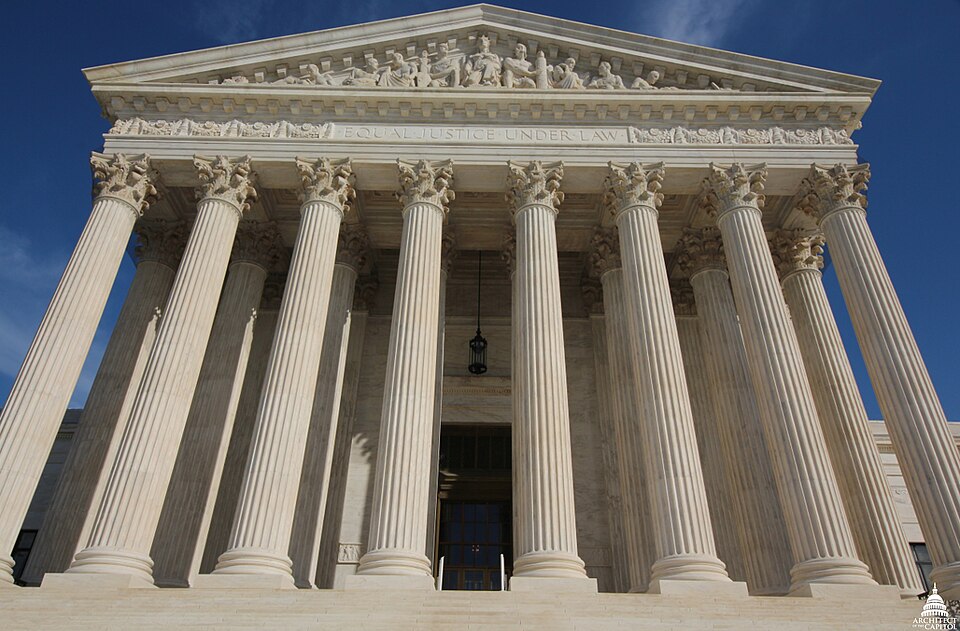
Supreme Court asks US about escrow interest, lets Zillow suit go on
In the first order list of its 2026 term, on Monday 5 October, the Supreme Court asked the Solicitor General for the government's views in seven cases, three of them bank appeals over state laws that make mortgage lenders pay interest on escrow balances (Bank of America, Flagstar, Citizens), and denied review to Zillow, Nexstar, Norfolk Southern and United Airlines, leaving the lower courts' rulings in place; an invitation decides nothing and sets no date.
What the Court ordered
The Supreme Court's order list of Monday 5 October, the first of its 2026 term, named a long roster of publicly traded companies without deciding any of their disputes. Under its heading for orders in pending cases, it invited the Solicitor General to file briefs 'expressing the views of the United States' in seven cases: Citizens Bank v. Conti, Cantero v. Bank of America and Flagstar Bank v. Kivett, three fights over state laws that make mortgage lenders pay interest on escrow balances; AstraZeneca v. Mosaic Health; United Biologics v. Amerigroup Tennessee; NHK Spring v. Seagate Technology; and Teck Metals v. Confederated Tribes of the Colville Reservation. Under its heading for denials it turned away more than 700 petitions, by the desk's count of the list, among them those of Zillow Group, Nexstar Media Group, Norfolk Southern's railway and United Airlines, and two challenges to the Corporate Transparency Act. [1, 2, 3, 4, 5]
Neither kind of order decides a case. An invitation asks the Solicitor General, the Justice Department's counsel of record for the government in the Court, now D. John Sauer, for the federal government's views while a petition is pending, and this order sets no deadline. Those views do not bind the justices: when the Court last asked about escrow interest, the government's brief of August 2023 urged it to deny review, and the Court took the case anyway, Bank of America's brief recounts. A petition for certiorari is a request for review, and the Court's orders page says its unsigned orders will, for example, 'deny a petition for certiorari without comment'. A denial leaves the lower court's ruling in place and, as The Desk wrote of the Nexstar case, 'does not resolve' the underlying allegations. [1, 4, 6, 7, 2, 8]
Escrow interest, back again
The three bank cases put one question, in the Cantero borrowers' words: 'Does the National Bank Act preempt the application of state interest-on-escrow laws to national banks?' Most home mortgages come with an escrow account, into which the borrower pays each month so that the lender can pay property taxes and insurance premiums on the borrower's behalf. New York requires lenders to credit interest on those balances at no less than 2 percent a year, or a higher rate its superintendent of financial services sets; California requires at least 2 percent; Rhode Island, the prevailing market rate on local savings accounts. Preemption is the rule that a valid federal law overrides a conflicting state one; under the Dodd-Frank Act of 2010, a state consumer financial law yields to the National Bank Act, the 1864 law under which national banks are established and regulated, 'only if' it 'prevents or significantly interferes with' a national bank's powers. In Cantero v. Bank of America, decided on 30 May 2024, the Court called for 'a practical assessment of the nature and degree of the interference' and sent the New York case back; on 10 June 2024 it did the same with Flagstar's California case. [3, 9]
The courts of appeals have since gone three ways. On 5 May 2026 a divided Second Circuit panel again held New York's law preempted, a ruling for Bank of America, and the borrowers petitioned on 22 May. The First Circuit had held in 2025 that Rhode Island's law is not preempted, reviving a borrower's proposed class action against Citizens Bank; the Court denied Citizens' petition on 20 April 2026, and on 11 May, after the Second Circuit's ruling, Citizens asked it to rehear the case, the request on which the 5 October invitation now sits. The Ninth Circuit held on 2 October 2025 that California's law binds Flagstar, upholding a judgment that, by Flagstar's quarterly report, orders it by injunction to pay interest going forward and awards a class of California borrowers $9.3 million in restitution and prejudgment interest, that is, the money withheld plus interest up to the judgment; Flagstar posted a bond, a guarantee of payment, to pause enforcement while it appeals, and petitioned on 1 June. [3, 6, 10, 11, 9, 1]
The national bank regulator has meanwhile taken a side. The Office of the Comptroller of the Currency, which charters and supervises national banks, published a final determination on 19 May 2026, effective 18 June, that federal law preempts New York's law and thirteen others it found to have 'substantively equivalent terms': those of California, Connecticut, Guam, Maine, Maryland, Massachusetts, Minnesota, Oregon, Rhode Island, Utah, Vermont, Wisconsin and the U.S. Virgin Islands. Flagstar's report dates the agency's two final rules to 15 May. Bank of America asks the Court to deny the borrowers' petition, citing the split's 'narrowness' and the new rules: 'No court has yet addressed what effect those agency determinations have on the courts' own preemption analyses.' The briefs count the laws differently: the Cantero borrowers say fourteen states have them; Flagstar counts twelve, leaving out Iowa's law as permissive and New Hampshire's as limited to state-chartered banks, as the agency also did. [12, 6, 11, 3, 9]
Four more invitations
Two of the other invitations sit on opposite sides of one question of antitrust, the law against price-fixing and other collusion. Eli Lilly and the US units of AstraZeneca, Novo Nordisk and Sanofi ask the Court to review a Second Circuit decision that revived a proposed class action by Mosaic Health and Central Virginia Health Services, health care providers that buy the companies' medicines through wholesalers at the discounts of the federal 340B program and allege that the drugmakers conspired to deny them 340B pricing. The companies rely on Illinois Brick, the Court's 1977 rule that only direct purchasers or sellers may sue alleged antitrust violators; the Second Circuit held, in words they quote, that 'Illinois Brick does not apply' where an indirect buyer claims lost profits rather than overcharges. On 10 October 2025 the Sixth Circuit read the rule the other way and barred lost-profit damages for United Allergy Services, an allergy-testing company that says allergists and insurers, Amerigroup Tennessee among them, conspired to push it out of the market. It is the petitioner in the second case, and the drugmakers cite that Sixth Circuit ruling as the conflict. [13, 14]
In the last two, a listed company's units won below in one and lost in the other. NHK Spring, which pleaded guilty in 2019 to conspiring to fix the prices of suspension assemblies, hard-drive parts, sold from 2008 to 2016, says the Ninth Circuit, ruling on 8 January 2026, became 'the first court in history' to hold foreign sellers liable under the Sherman Act, the main federal antitrust law, to foreign buyers for deals abroad 'based solely on the fact that those transactions were negotiated in part in the United States'. Seagate, whose units are the buyers, answers that 'that premise is false': the court rested on the effect on US prices of the conspiracy NHK admitted, and sent the question of causation back for further proceedings. Teck Metals, a subsidiary of Teck Resources, asks whether CERCLA, the federal law on cleaning up hazardous waste, allows damages for 'the felt loss of a cultural connection' to natural resources; the Ninth Circuit let the Colville Tribes press such a claim, worth more than $500 million by Teck's account, over discharges from its smelter into the Columbia River, on top of $177 million the tribes and Washington state sought jointly to restore those resources. [15, 16, 17]
Petitions turned away
The denials leave lower-court rulings in place. Zillow Group asked the Court to undo the certification, a court's approval to sue as one group, of a class of investors who bought its stock between 7 August 2020 and 2 November 2021 and who allege it misled them about Zillow Offers, its business of buying homes, renovating them and reselling them, which it announced it was ending in November 2021. The Ninth Circuit affirmed the certification on 26 September 2025. Zillow argued that its later disclosures did not 'actually correct' the statements the investors challenge, a test it draws from the Court's 2021 Goldman Sachs decision; the class now stays certified in the federal court in western Washington. 'We look forward to now moving this case to trial,' Steve Berman of Hagens Berman, the firm that brought the class action, told Reuters, which said Zillow did not respond to a request for comment. Zillow's quarterly report for the three months to 30 June calls a loss reasonably possible but not estimable, and records no material accrual for the suit. [18, 19, 20, 1]
Nexstar Media Group, with Mission Broadcasting and White Knight Broadcasting, station owners that have sharing arrangements with it, asked the Court to end DirecTV's 2023 antitrust suit. DirecTV alleges the three worked together to demand artificially high retransmission consent fees, what a pay-TV distributor pays for the right to carry a broadcaster's stations; it refused to pay, some stations went dark for a million of its subscribers, and it says thousands canceled, Reuters reported. A federal judge dismissed the suit; in December 2025 the Second Circuit revived it, ruling that DirecTV could pursue claims for lost profits, and Nexstar argued that only a buyer who actually pays an allegedly fixed price may sue. The case goes on in federal court in New York, where DirecTV told the court in August that communications Nexstar produced show coordination through a media consultant, The Desk reported. [21, 22, 8]
Norfolk Southern Railway, a subsidiary of Norfolk Southern Corporation, asked the Court to settle what it left open in 2023, when it held that Pennsylvania did not violate due process, the Constitution's guarantee of fair procedure, by hearing a suit against the railway solely because it is registered to do business there; the suit, now pressed by the estate of a former worker who lived in Virginia, alleges exposure to carcinogens in Ohio and Virginia. The open question is the Commerce Clause, the Constitution's grant of power over trade between the states: the railway argued, following Justice Alito's 2023 opinion, that Pennsylvania's scheme discriminates against or significantly burdens that trade without a legitimate local interest. A Philadelphia trial court rejected that without explanation, Pennsylvania's appeals courts declined to review it, and the suit stays there. The Court also turned away two challenges to the Corporate Transparency Act, which requires covered companies to report their beneficial owners, those who control them or own at least 25 percent, to the Treasury: National Small Business United v. Bessent, where the Eleventh Circuit upheld the law, and Texas Top Cop Shop v. Blanche, which asked the Court to step in before the Fifth Circuit ruled. The act excludes companies with securities registered under the Securities Exchange Act, the federal law under which listed companies register their shares, or required to file periodic reports under it, and the government's brief says Treasury's final rule of 14 August 2026 confines reporting to foreign companies' foreign owners and applicants. [23, 4, 24, 5, 1]
Justice Kavanaugh noted that he would have granted two company petitions. One came from two Energy Transfer subsidiaries formerly named Sunoco, which asked the Court to set aside a $100 million award to a class of 53,000 Oklahoma oil-well interest owners for statutory interest on late payments of their proceeds, an award the Tenth Circuit affirmed; Justice Alito took no part. The other came from United Airlines, which challenged the Fifth Circuit's approval of a class of employees it deemed customer-facing, pilots and flight attendants among them, who received religious accommodations from its 2021 COVID-19 vaccine requirement and were put on unpaid leave; its petition puts the class at nearly 1,000 people. Both petitions were denied all the same, and both rulings stand. [1, 25, 26]
What settles it next
The next record in the seven invited cases is the government's brief, on a date the order does not set; in this dispute's last round, the Court granted review after the government's brief of August 2023, Bank of America's brief recounts. Until the Court acts, the lower courts' rulings govern: Flagstar's judgment stands, its enforcement paused by the bank's bond, and the suit against Citizens goes on in the district court. Among the denials, Real Estate News reported in August that the Zillow class action is set for trial on 13 September 2027, a date Zillow's quarterly report does not give; DirecTV's suit goes on in New York, and the Mallory suit in Philadelphia. The Comptroller's escrow determination has been in effect since 18 June; what it means for the pending suits is, in Bank of America's words, something 'No court has yet addressed'. [1, 6, 11, 10, 7, 19, 22, 23, 12]
Who it reaches
Bank of America (BAC) is reached through Bank of America, N.A., the respondent in Cantero, which won in the Second Circuit and asks the Court not to take the case. Flagstar Bank (FLG), itself the listed company, is the petitioner in Kivett and carries the $9.3 million judgment and the order to pay interest on California escrow balances. Citizens Financial Group (CFG) owns Citizens Bank, the petitioner in Conti, whose request for rehearing is the one pending. Eli Lilly (LLY), AstraZeneca (AZN), Novo Nordisk (NVO) and Sanofi (SNY) are petitioners in the 340B case, Lilly directly and the others through US units. Seagate Technology Holdings (STX) is the ultimate parent of the Seagate units that won in the Ninth Circuit against NHK Spring, and Teck Resources (TECK) owns Teck Metals, the petitioner in the Colville case. [6, 9, 11, 10, 13, 16, 17]
Zillow Group (ZG) faces the certified investor class in western Washington. Nexstar Media Group (NXST) faces DirecTV's suit in New York; its quarterly report to 30 June also records a separate DirecTV suit, brought alongside one by state attorneys general, against its merger with TEGNA, in which a federal court in California has barred further integration of the two companies and set trial for 6 July 2027. Norfolk Southern (NSC) is the parent of the railway that remains a defendant in Philadelphia. United Airlines Holdings (UAL) owns United Airlines, which faces the class certified from its employees. [18, 19, 27, 23, 26]
Sources
- Supreme Court of the United States, order list of Monday 5 October 2026 (610 U.S.): orders in pending cases and certiorari denied, 2026-10-05
- Supreme Court of the United States, Orders of the Court, term year 2026 (read 6 October 2026), 2026-10-05
- Alex Cantero et al., petition for a writ of certiorari, Cantero v. Bank of America, N.A., No. 25-1313, filed 22 May 2026, 2026-05-22
- United States, brief for the federal respondents in opposition (Solicitor General D. John Sauer), National Small Business United v. Bessent, No. 25-1201, filed , 2026-08-21
- Texas Top Cop Shop, Inc. et al., petition for a writ of certiorari before judgment, No. 25-1290, filed 6 May 2026 (corrected copy), 2026-05-06
- Bank of America, N.A., brief in opposition, Cantero v. Bank of America, N.A., No. 25-1313, filed 10 August 2026, 2026-08-10
- Real Estate News, Heavy-hitters back Zillow's SCOTUS petition in securities case, by Amie Fisher, 7 August 2026, 2026-08-07
- The Desk, Supreme Court rejects Nexstar bid to end DIRECTV retrans lawsuit, by Matthew Keys, 5 October 2026, 2026-10-05
- Flagstar Bank, N.A., petition for a writ of certiorari, Flagstar Bank, N.A. v. Kivett, No. 25-1350, filed 1 June 2026, 2026-06-01
- Citizens Bank, N.A., petition for rehearing, Citizens Bank, N.A. v. Conti, No. 25-1004, filed 11 May 2026, 2026-05-11
- Flagstar Bank, N.A., quarterly report on Form 10-Q for the quarter ended 30 June 2026 (Interest on Escrow Preemption; Other Recent Developments), filed 6 August, 2026-08-06
- Office of the Comptroller of the Currency, Preemption Determination: State Interest-on-Escrow Laws, final rule, 91 Fed. Reg. 29350, 19 May 2026, 2026-05-19
- AstraZeneca Pharmaceuticals LP, Eli Lilly and Company et al., petition for a writ of certiorari, AstraZeneca v. Mosaic Health, No. 25-1070, filed 5 March 2026, 2026-03-05
- United Biologics, LLC (United Allergy Services), petition for a writ of certiorari, No. 25-1388, filed 12 June 2026, 2026-06-12
- NHK Spring Co., Ltd. et al., petition for a writ of certiorari, NHK Spring v. Seagate Technology, No. 25-1358, filed 4 June 2026, 2026-06-04
- Seagate Technology LLC et al., brief in opposition, NHK Spring v. Seagate Technology, No. 25-1358, filed 22 July 2026, 2026-07-22
- Teck Metals Ltd., petition for a writ of certiorari, Teck Metals v. Confederated Tribes of the Colville Reservation, No. 26-130, filed 24 July 2026, 2026-07-24
- Zillow Group, Inc. et al., petition for a writ of certiorari, Zillow Group v. Jaeger, No. 25-1365, filed 5 June 2026, 2026-06-05
- Zillow Group, Inc., quarterly report on Form 10-Q for the quarter ended 30 June 2026 (Legal Proceedings), filed 5 August 2026, 2026-08-05
- Reuters, US Supreme Court won't hear Zillow's bid to escape investor class action, by Jan Wolfe, 5 October 2026 (as carried by 102.7 WBOW), 2026-10-05
- Nexstar Media Group, Inc. et al., petition for a writ of certiorari, Nexstar Media Group v. DirecTV, No. 25-1243, filed 28 April 2026, 2026-04-28
- Reuters, US Supreme Court rejects Nexstar bid to avoid DirecTV lawsuit over fees, by Mike Scarcella, 5 October 2026 (as carried by KFGO), 2026-10-05
- Norfolk Southern Railway Company, petition for a writ of certiorari, Norfolk Southern v. Mallory, No. 25-1208, filed 17 April 2026, 2026-04-17
- 31 U.S.C. 5336, beneficial ownership information reporting requirements (Legal Information Institute, Cornell Law School; read 6 October 2026), 2026-10-06
- Sunoco, Inc. (R&M) and Sunoco Partners Marketing & Terminals, L.P., petition for a writ of certiorari, Sunoco v. Cline, No. 26-1, filed 26 June 2026, 2026-06-26
- United Airlines, Inc., petition for a writ of certiorari, United Airlines v. Kincannon, No. 26-183, filed 7 August 2026, 2026-08-07
- Nexstar Media Group, Inc., quarterly report on Form 10-Q for the quarter ended 30 June 2026 (TEGNA related litigation), filed 7 August 2026, 2026-08-07
Every stock is a company; the desk grades the company behind the stock. This article describes; it does not recommend. Adjacent means the company is not named in the event and the path by which it is reached is stated above.