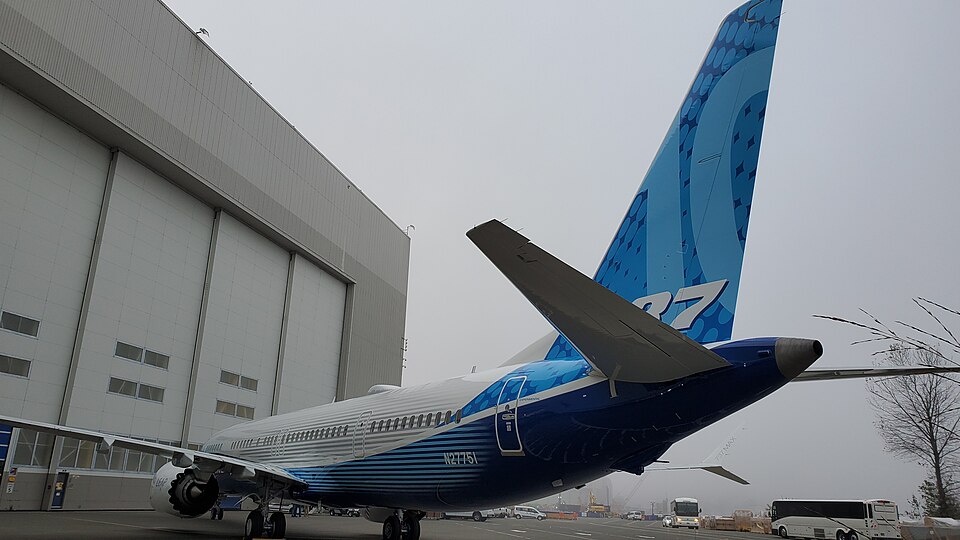
The FAA holds the 737 Max 10 over a flight-guidance fault
The administrator said the delay runs 'until we're satisfied that we don't have an issue here' and would not say how long; Boeing's own quarterly report puts the -10 at about 31 percent of 4,404 undelivered 737s, United carries 167 firm orders with 20 expected in 2027, Delta 100, and Alaska's own table pencils in 25 in 2027 and 25 more in 2028.
What the FAA said on Monday
On Monday 28 September the Federal Aviation Administration said it will not certify Boeing's 737 Max 10 until a newly disclosed software fault is resolved. Speaking to reporters at Reagan Washington National Airport, the administrator, Bryan Bedford, said: 'We will be delaying the 10 until we're satisfied that we don't have an issue here.' He declined to say how long the delay would last. Reuters reported that certification of the -10 had been widely expected in October, and that the Corrective Action Review Board the agency is convening to examine the fault is unlikely to meet before next week at the earliest. [1, 2]
The agency's own words were narrower than a verdict. It said the software can add to a pilot's workload during a go-around, that it 'is working closely with Boeing and the airlines', and that it 'will take immediate action if it identifies a safety concern'. Bedford called the smaller 737 Max 7, which the agency certified in August, safe to fly, and compared the fix to a software update for a phone or an office program. On the supplier he said: 'I think in this particular case, due to the focus that's on it, GE may try to get this software correction in much quicker.' [2, 3]
The fault, as Boeing described it
Boeing disclosed the problem on Saturday 26 September, after the Wall Street Journal reported it from company documents. In its statement the company said: 'Last month, we informed all 737 operators about a software issue where pilots may not have access to automated flight guidance during a specific landing scenario.' It added that it had 'shared information with operators that reinforced existing pilot procedures for safely handling such cases', that pilots are trained to land without automated vertical navigation, and that 'our engineers are working on a software update to permanently address the issue'. On Monday a spokesperson said: 'We continue to follow the lead of the FAA as we work through the certification process.' [4, 5, 3, 1]
The fault sits in versions 14 and 14.1 of the flight management computer software, which Reuters reported is supplied by GE Aerospace. When a crew flying a missed approach with the autopilot engaged changes the programmed flight plan, the flight guidance can drop out of vertical navigation into simpler modes such as level change or vertical speed, leaving the crew to manage altitude constraints by hand. Airways Magazine reported that an airline first raised the behaviour with Boeing in November 2024, that Boeing concluded in February 2025 it was not a safety issue, and that a formal safety review began in September 2026. [6, 5, 1]
The airlines have answered in their own ways. Southwest and United asked Boeing to pause deliveries of aircraft carrying the affected versions and said they would accept earlier software; United said it is not taking deliveries with this version. Alaska said none of its aircraft use it and that it is working with Boeing and the FAA. WestJet, which does operate it, told Reuters it had seen no in-service issues and did not consider the matter a safety concern. GE Aerospace did not immediately respond to Reuters. [5, 4, 1, 6]
What Boeing told the market in July
The record is plainer than the headlines. Boeing's quarterly report for the three months to 30 June, filed on 28 July, says: 'We continue to expect certification of the 737-7 and 737-10 in 2026, including the final certification of the engine anti-ice solution. As of June 30, 2026, we had approximately 40 737-7 and 737-10 aircraft in inventory.' It goes on: 'We are following the lead of the FAA as we work through the certification process and the ultimate timing will be determined by the regulators.' The -7 has since been certified, on 3 August according to Airways Magazine; the -10's final certification flight was flown in July. [7, 6]
The same report names the risk in its own words: 'If we are unable to deliver aircraft and/or increase production rates or certify the 737-7 and 737-10 models consistent with our assumptions, our financial position, results of operations and cash flows will be adversely affected.' Three times it repeats that the backlog may shrink through 'delays to entry into service of the 777X, 737-7 and/or 737-10'. During the first half of 2026 the 737 line began moving from 42 to 47 aircraft a month with the FAA's concurrence, and a new production line began low-rate output in July; that line must itself be certified by the FAA before a first delivery. [7]
How much of the order book is the -10? The report gives 4,404 undelivered 737s under firm orders at 30 June, and says approximately 31 percent of them were the -10, up from 29 percent at the end of 2025. Applied to the total, that is about 1,365 aircraft, a figure computed here from the two filed numbers rather than one Boeing states; the -8 was 58 percent, the -7 six and the -9 five. [7]
Who is waiting for the plane
The airlines' own reports say who is waiting and when they thought it would come. United's quarterly report of 16 July lists 167 firm commitments for the 737 Max 10: three contractually due in the last six months of 2026, 44 in 2027 and 120 after that, against its own expectation of none this year, 20 in 2027 and 147 after 2027, 'reflecting adjustments communicated by Boeing and Airbus or estimated by United'. [8]
Delta's report of 10 July carries purchase commitments for 100 737-10s and options on 30 more; its fleet table shows none in service. Alaska's report of 4 August says it had firm orders for 168 737s 'with deliveries expected between 2027 and 2035', and its anticipated fleet table, which it says reflects 'Boeing's most recent communications and management's current estimates', pencils in 25 737-10s during 2027 and 25 more during 2028. The report adds that 'Boeing continues to experience aircraft delivery delays attributable to supplier availability, production challenges, and regulatory approval processes'. Airways Magazine puts Alaska's -10 order at 105 aircraft with 35 options and its planned first passenger flights in April or May 2027. [9, 10, 6]
Southwest has no -10 on order; its book with Boeing is the -7 and the -8 through 2031. Its report of 23 July says it converted 19 of this year's deliveries from the -7 to the -8 in the first half, and that 'Boeing continues to experience delays in fulfilling its commitments with regards to delivery of MAX aircraft to the Company, primarily as a result of manufacturing challenges' and delays in FAA certification. [11]
The shares, as the sources report them
Reuters reported that Boeing's shares closed down 6.9 percent on Monday. CNBC's page on the delay could not be read by the desk and is cited for its headline only. [1, 12]
Who it reaches
Boeing directly, as the maker of the aircraft whose certification the FAA has held. United, Delta and Alaska through the orders in their own filings, Southwest through the -7 and -8 deliveries its report says Boeing is late on, and GE Aerospace as the supplier of the flight management software Reuters named. What settles the timing is the Corrective Action Review Board's finding and the update Boeing's engineers are writing; neither carries a date on the record. [1, 8, 9, 10, 11, 7]
Sources
- Reuters via CP24, U.S. FAA delays Boeing 737 Max 10 certification, shares dive 7%, by Allison Lampert, David Shepardson, Dan Catchpole and Rajesh Kumar Singh, 2026-09-28
- Reuters via MarketScreener, US FAA delays Boeing 737 MAX 10 certification, shares dive 6% (the later version of the same report), 2026-09-28
- AFP via France 24, Certification of Boeing 737 MAX delayed by software bug, 2026-09-28
- Reuters via NBC News, Boeing identifies 737 MAX software glitch affecting landing navigation, 2026-09-26
- Aviation Week, Boeing Tackles 737 MAX Software Glitch With -10 Certification Looming, by Guy Norris, 2026-09-27
- Airways Magazine, FAA Reviews 737 MAX Flight-Guidance Software Issue as Boeing Seeks 737-10 Certification, by Helwing Villamizar, 2026-09-27
- The Boeing Company, quarterly report on Form 10-Q for the quarter ended 30 June 2026 (the 737 program, backlog and the accounting quantity table), 2026-07-28
- United Airlines Holdings, quarterly report on Form 10-Q for the quarter ended 30 June 2026 (contractual and expected aircraft deliveries), 2026-07-16
- Delta Air Lines, quarterly report on Form 10-Q for the quarter ended 30 June 2026 (aircraft purchase commitments by fleet type), 2026-07-10
- Alaska Air Group, quarterly report on Form 10-Q for the quarter ended 30 June 2026 (firm orders and the anticipated fleet activity table), 2026-08-04
- Southwest Airlines, quarterly report on Form 10-Q for the quarter ended 30 June 2026 (commitments with Boeing), 2026-07-23
- CNBC, Boeing 737 Max 10 certification delayed by software issue, FAA says (the page refused the desk's fetch; cited for its headline), 2026-09-28
Every stock is a company; the desk grades the company behind the stock. This article describes; it does not recommend. Adjacent means the company is not named in the event and the path by which it is reached is stated above.