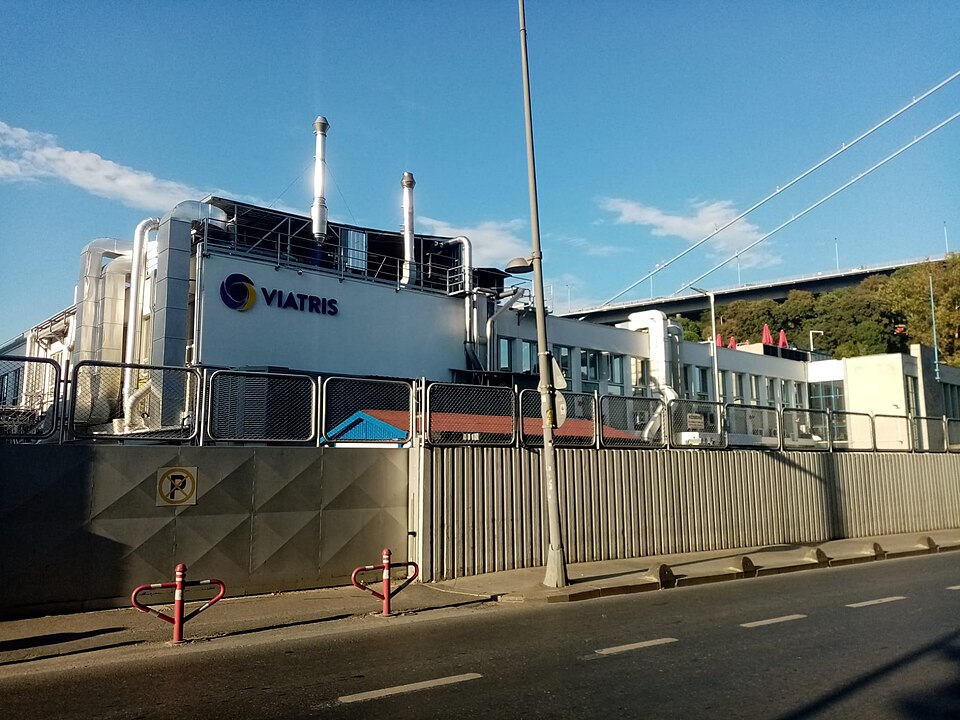
Viatris agrees to buy Pacira and its non-opioid pain drugs
On Thursday 8 October Viatris agreed to acquire Pacira BioSciences, maker of the non-opioid pain medicines EXPAREL and ZILRETTA, for an aggregate equity value the companies put at $1.65 billion, through a cash tender offer followed by a merger; the deal carries no financing condition and a $62 million fee Pacira would owe if it walked away for a better offer, Viatris says it will pay mainly from excess cash with the rest from short-term borrowings, and both companies expect it to close by the end of 2026.
What the companies signed
On Thursday 8 October Viatris, the global healthcare company with its principal offices in Canonsburg, Pennsylvania, signed an Agreement and Plan of Merger with Pacira BioSciences of Brisbane, California, and with Peach Purchaser Sub, a subsidiary Viatris owns outright, and reported it to the Securities and Exchange Commission the same day. The companies' joint release puts the aggregate equity value, the total paid for all of Pacira's shares, at $1.65 billion, in cash. The boards of both companies approved the deal unanimously, and Pacira's board recommends that its holders accept the offer. [1, 3]
What Viatris is buying is two medicines sold in the United States. EXPAREL is bupivacaine, a long-established numbing drug, packed into tiny fat-based capsules called multivesicular liposomes so that a single dose releases the drug over time after surgery; ZILRETTA is a steroid, triamcinolone acetonide, held in slowly dissolving microspheres and injected into the knee for osteoarthritis pain. Pacira also brings PCRX-201, a gene therapy injected into the knee and now in Phase 2 trials, the middle stage of human testing. The chief executive of Viatris, Scott A. Smith, called the deal an important step in the company's strategy to build its innovative medicines business. [3, 9]
A tender offer, then a merger
The deal runs in two steps. First, Viatris' subsidiary makes a tender offer: a public offer to buy Pacira's shares directly from their holders for cash, which each holder may accept or ignore. The agreement says the offer is to start as promptly as practicable and in no event more than 15 business days after Thursday 8 October, and is to stay open initially until one minute after 11:59 p.m. Eastern Time on the tenth business day after it starts. Viatris must then file its offer documents on Schedule TO with the SEC, and Pacira its recommendation on Schedule 14D-9. [1, 2]
The offer can only be completed if holders tender at least one share more than half of all Pacira's shares, a test the agreement calls the Minimum Condition, which Viatris may not waive without Pacira's written consent. Once the offer is completed, the subsidiary merges into Pacira under Section 251(h) of Delaware's corporation law, a rule that lets a buyer who already holds a majority through a tender offer finish the merger without a shareholder vote. Every share not tendered is then converted into the right to the same cash, except shares whose holders properly demand appraisal, a court's own valuation, under Section 262 of the same law. Pacira then becomes a wholly owned subsidiary of Viatris and its stock leaves the Nasdaq Global Select Market. [1, 2, 3]
The money and the conditions
Viatris' interim finance chief, Paul Campbell, said in the release that the company expects 'to fund the transaction primarily from excess cash with the remainder from short-term borrowings', and that the deal will have minimal impact on its gross leverage ratio, a measure of debt against earnings. In the agreement Viatris states that it has the cash or other liquid resources to pay, and the 8-K says completing the offer 'is not subject to a financing condition'. Viatris' quarterly report shows cash and cash equivalents of $886.5 million at Tuesday 30 June, access to a $3.5 billion revolving credit line maturing in September 2029, up to $1.65 billion of which can back a commercial paper program of short-term company IOUs, and no borrowings outstanding under either on that date. Pacira also carries $287.5 million of convertible notes, which the agreement deals with in a section of their own. [1, 2, 3, 6]
The other conditions are the ones the 8-K lists: Pacira's statements in the agreement must be accurate within agreed limits and its promises kept, no court or law may block the deal, and the waiting period under the Hart-Scott-Rodino Act, the federal law that makes large buyers notify the antitrust agencies and wait before closing, must have expired or been ended. Both companies agreed to file that notice within 15 business days of signing. The agreement does not oblige Viatris to accept a 'Burdensome Condition', which it defines to include selling or holding apart any of the Pacira products listed in a confidential schedule, or any remedy that would be material to Viatris measured against Pacira's size. [1, 2]
If the agreement ends in the cases it names, among them Pacira signing a better offer from someone else or its board withdrawing its recommendation, Pacira must pay Viatris a termination fee of $62,000,000, which by the desk's arithmetic is about 3.8 percent of the $1.65 billion equity value. The agreement read for this piece names no fee payable by Viatris. Either side may end the deal if the offer has not been completed by Thursday 8 April 2027, a date that extends automatically to Thursday 8 July 2027 if everything but the antitrust clearance and legal restraints is done by then. [1, 2, 3]
Pacira by its own figures
The release says Pacira generated about $746 million in total revenue and about $177 million in adjusted EBITDA, earnings before interest, taxes, depreciation and amortization after the company's own adjustments, during the twelve months ended Tuesday 30 June 2026. The revenue figure can be rebuilt from Pacira's filings: total revenues of $726.4 million for 2025 in its annual report, less $350.0 million for the first half of 2025, plus $369.8 million for the first half of 2026 in its quarterly report, comes to $746.2 million by the desk's arithmetic. The adjusted EBITDA figure is not a filed number; it appears only in the release. Pacira's quarterly report shows net income of $7.6 million for the first half of 2026. [3, 4, 5]
EXPAREL carries the business: its net product sales were $575.1 million in 2025, 79 percent of total revenues, the annual report says, and $291.1 million in the first half of 2026 against $279.4 million a year earlier. ZILRETTA's net product sales were $116.6 million in 2025 and $59.4 million in the first half of 2026. The twelve-month figure also includes a third product Pacira no longer owns: it sold its iovera nerve-freezing device business to Zimmer for up to $140.0 million, including $70.0 million up front, in a sale that closed on Friday 31 July 2026, after which, the quarterly report says, Pacira no longer records iovera revenue; iovera's net product sales were $13.0 million in the first half of 2026. [4, 5]
The release says Viatris plans to use its 'proven ability to extend product lifecycles and sustain meaningful sales after the entry of competition' on Pacira's medicines. Pacira's annual report sets out how that competition is scheduled: 16 EXPAREL patents issued since 2021 expire on Tuesday 22 January 2041, and a 2025 settlement licenses eVenus, its parent Jiangsu Hengrui and Fresenius Kabi to sell a volume-limited generic version from a confidential date in early 2030, starting at a high single-digit share of US volume and reaching the high thirties, with unlimited sales from a confidential date in 2039. Two more makers of generic drugs, WhiteOak and Qilu, challenged the EXPAREL patents in October 2025, and Pacira sued both in federal court in Delaware on Wednesday 26 November 2025; the quarterly report says the company cannot predict the outcome. [3, 4, 5]
What settles it next
The dated records still to come, as filed: the start of the tender offer, with Viatris' Schedule TO and Pacira's Schedule 14D-9, no more than 15 business days after Thursday 8 October; the Hart-Scott-Rodino filings within the same 15 business days; and the offer's first expiry ten business days after it starts, which Viatris must extend in steps of up to ten business days while the antitrust waiting period runs. For a cash tender offer the federal rule ends that waiting period on the 15th calendar day after it begins, unless the agencies ask for more information, which pushes the end to the 10th day after the companies comply. Viatris reports its third-quarter results on Thursday 5 November 2026, with a call at 8:30 a.m. Eastern Time to discuss them and the Pacira deal, and both companies say they expect the deal to close by the end of 2026. [1, 2, 3, 7]
A separate date sits beside the deal. Viatris has a marketing application before the Food and Drug Administration for MR-107A-02, a fast-acting form of the painkiller meloxicam for moderate to severe acute pain, and the agency set Sunday 27 December 2026 as its goal date for a decision, Viatris said on Monday 18 May. Smith said EXPAREL and ZILRETTA 'are synergistic with our fast-acting meloxicam market opportunity'. Pharmaphorum reported that the Pacira deal is Viatris' first acquisition since it bought the Japanese neurology drug developer Aculys Pharma in October 2025. [3, 8, 9, 10]
Who it reaches
Viatris (VTRS) is the buyer: it pays the $1.65 billion equity value through its subsidiary's offer, mainly from cash by its finance chief's account, and adds two patent-protected US medicines to a business whose total revenues were $7,273.8 million in the first half of 2026, by its quarterly report. Pacira BioSciences (PCRX) is the company being bought: its holders decide the tender, its board recommends they accept, it owes the $62 million fee if it leaves for a better offer, and its shares stop trading once the merger closes. [1, 2, 3, 6]
Sources
- Viatris Inc., current report on Form 8-K, Item 1.01 (the merger agreement), filed with the SEC on 8 October 2026, 2026-10-08
- Agreement and Plan of Merger among Pacira BioSciences, Viatris and Peach Purchaser Sub, dated 8 October 2026 (Exhibit 2.1 to Viatris' 8-K), 2026-10-08
- Viatris and Pacira BioSciences, joint press release 'Viatris Agrees to Acquire Pacira BioSciences', 8 October 2026 (Exhibit 99.1 to Viatris' 8-K), 2026-10-08
- Pacira BioSciences, quarterly report on Form 10-Q for the quarter ended 30 June 2026, filed 4 August 2026, 2026-08-04
- Pacira BioSciences, annual report on Form 10-K for 2025, 2026-02-26
- Viatris Inc., quarterly report on Form 10-Q for the quarter ended 30 June 2026, filed 6 August 2026, 2026-08-06
- 16 CFR 803.10, the Hart-Scott-Rodino rule on the running of the waiting period (Legal Information Institute, Cornell Law School), 2026-10-09
- Viatris, 'U.S. FDA Accepts Viatris New Drug Application for Fast-Acting Meloxicam', release of 18 May 2026 (PR Newswire copy on BioSpace), 2026-05-18
- pharmaphorum, 'Viatris builds in pain relief with $1.65bn Pacira purchase', 8 October 2026, 2026-10-08
- Quartz, 'Viatris to acquire Pacira BioSciences for $1.65 billion', 8 October 2026 (copy on Yahoo Finance), 2026-10-08
Every stock is a company; the desk grades the company behind the stock. This article describes; it does not recommend. Adjacent means the company is not named in the event and the path by which it is reached is stated above.