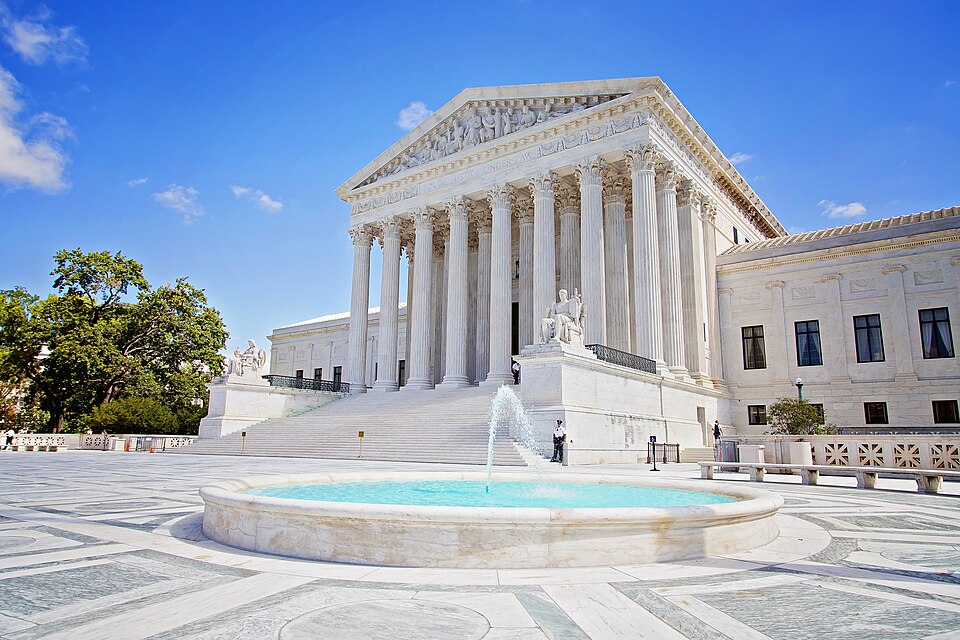
Supreme Court weighs Boulder's climate suit against Exxon and Suncor
On Monday 5 October the Court heard Exxon Mobil's and two Suncor units' appeal of a Colorado ruling that lets Boulder seek damages for local climate harm; it must decide whether federal law bars such state-law claims and whether it may hear the case at all, with Justice Alito not taking part and nearly 60 governments, by the companies' count, bringing similar suits.
What the case asks
The Supreme Court opened its new term on Monday 5 October by hearing Suncor Energy (U.S.A.) Inc. v. County Commissioners of Boulder County, No. 25-170, the first case argued in the term, as the Colorado Sun and CNN reported. The case asks 'Whether federal law precludes state-law claims seeking relief for injuries allegedly caused by the effects of interstate and international greenhouse-gas emissions on the global climate', that is, whether federal law bars a suit under Colorado law for local harm blamed on emissions from other states and countries. Granting review on 23 February 2026, the Court added a second question: 'Whether this Court has statutory and Article III jurisdiction to hear this case.' In plain words: whether the federal statute that lets the Court review '[f]inal judgments or decrees' of a state's highest court reaches a ruling made before any trial, and whether the companies have suffered the kind of injury that Article III of the Constitution requires before a federal court may decide. [1, 2, 3, 13, 14]
The companies asking for review are Suncor Energy (U.S.A.) Inc. and its subsidiary Suncor Energy Sales Inc., both owned through a holding company by the Canadian Suncor Energy Inc., and Exxon Mobil Corporation. The County Commissioners of Boulder County and the City of Boulder sued them in Colorado state court in April 2018 for public and private nuisance, an unreasonable interference with public rights or the use of property; trespass, an invasion of property; unjust enrichment, a benefit kept at another's expense; and civil conspiracy, acting together to do a wrong. They seek damages for the role that the companies' 'production, promotion, refining, marketing, and sale of fossil fuels' allegedly played in climate change, to cover costs such as wildfire response, flood repair and drought. In the Colorado Supreme Court's words, Boulder 'does not, however, seek to enjoin any oil and gas operations or sales in Colorado or elsewhere. Nor does it seek to enforce emissions controls of any kind.' To enjoin is to stop by court order. The sums at stake are described differently: that court summarized the complaint as alleging 'millions of dollars in costs', while the companies' brief says Boulder seeks to recoup 'billions of dollars'. [3, 5]
The companies argue that the Constitution itself keeps one state's law from governing harm caused by emissions elsewhere: 'The States surrendered their ability to redress inherently transboundary issues such as global climate change when they agreed to enter the Union,' their brief says. They add that claims resting on emissions abroad would undermine the federal government's 'exclusive control over foreign affairs', and that the Clean Air Act, the federal air pollution law, preempts the claims on its own, preemption being the rule that a valid federal law overrides state law. The United States backs them as a friend of the court, in a brief signed by Deputy Solicitor General Sarah M. Harris because the Solicitor General is recused, meaning he has stepped aside from the case, and on 4 September the Court let it share the argument. 'The Constitution rejects that butterfly-effect theory of state authority,' its brief says. Boulder answers that the companies 'identify no constitutional text' for their rule, that 'since the Founding, courts have applied state law (usually the law of the state of injury) to out-of-state torts causing in-state harm', and that the Clean Air Act 'regulates point-source emissions', pollution from identifiable sources such as plants, 'not the upstream production, sale, or marketing of products that later produce them'. [3, 6, 2, 4]
On the added question, the companies say the Colorado ruling ended 'a self-contained original proceeding in Colorado's court of last resort', a separate case Exxon opened in the state's highest court under its Appellate Rule 21, and so counts as final, as the Court held of a Montana supreme court ruling in Atlantic Richfield Co. v. Christian in 2020. They say the ruling injures them because it binds Colorado's courts in the climate suits pending there and leaves them to 'continue defending these lawsuits'. Boulder replies that the ruling 'merely declined to dismiss on the pleadings', that any injury 'remains speculative' because Boulder 'must still prove' its claims, and that 'Continued litigation costs are a byproduct of the suit itself, not a cognizable injury.' It asks the Court to dismiss the case for lack of jurisdiction or else to affirm, and says the companies came 'to the wrong forum at the wrong time with the wrong arguments'. [3, 4]
What the justices asked
The Court had not posted its official transcript when this was written, so the exchanges here are as reporters in the courtroom printed them. Kannon Shanmugam argued for the companies and Sarah Harris for the United States, Reuters and the Colorado Sun reported, and Kevin Russell for Boulder, the Sun reported. 'This case involves an unprecedented effort to use state law to regulate global conduct,' Shanmugam told the justices, according to Reuters; in the Sun's account he warned that if Boulder's claims went forward, 'some 90,000 municipalities across the country will have the ability to make national and international energy policy by asking juries to impose catastrophic damages on selected fossil fuel producers.' Harris told the Court that 'Interstate air pollution is an inherently federal area' and that 'this suit egregiously exceeds constitutional limits on state authority', Reuters reported. [12, 13]
Russell answered with analogies, the Sun reported: 'When somebody in New York defames a citizen of Boulder on national television, or somebody in California releases a computer virus on the internet, or biological virus into the world, and it causes mass damage in Colorado, it has never been thought that only federal law can provide a remedy.' Justice Brett Kavanaugh said multiple federal court decisions 'make crystal clear that interstate air and water pollution are matters for federal law unless Congress specifically preserves state law', the Sun reported, and CNN quoted him saying such suits could 'bankrupt these various defendants and certainly other defendants out there' and that 'Anyone is a potential defendant for a suit like this.' Justice Elena Kagan said, in the Sun's account, 'There are nuisance suits that we have permitted under state law in the Clean Water Act, and I don't see why we wouldn't permit it under the Clean Air Act either.' Answering a question from her, Shanmugam said: 'Our bottom line is that no state's law can apply here.' [13, 14]
Chief Justice John Roberts questioned both sides. Reuters reported that he pressed Shanmugam and Harris on why state suits would be barred when such litigation has been allowed in similar settings, telling Harris: 'I guess I'm not quite sure what makes this situation different from all those other ones where we've allowed (it).' The Sun reported him telling the companies' lawyers that 'If you throw a rock over the border' and hit someone, you can be sued. CNN reported that he 'seemed particularly concerned' that 'at least 50' more cities might bring follow-on suits if Boulder wins, asking, 'How do you think that will work out on the ground?', and that at one point he suggested Boulder's approach was an attempt to 'evade' the Court's earlier decisions. Harris told the Court, the Sun reported, that 'Colorado's entire thesis is that by a mere fact of having injuries in Colorado, they can regulate petitioners' worldwide conduct', calling it 'an unprecedented idea'. [12, 13, 14]
On the question the Court added, Justice Ketanji Brown Jackson said the exchanges with her colleagues 'make me think that we're really early in this case' and that it was 'sort of premature from the standpoint of this court exercising its jurisdiction', as both Reuters and the Sun reported. 'I understand that you have several other federal issues that you have raised that are still pending in the state court. So why shouldn't we wait and hear all of these claims once the state courts are done with their federal considerations?' she asked Shanmugam, Reuters reported. He replied that 'given the extraordinary magnitude of these cases, where in each of these cases plaintiffs are seeking billions of dollars of damages, that we need an answer to this question sooner rather than later'. In rebuttal, the Sun reported, he said Boulder could sue him 'when I am in Colorado in two weeks' on 'a nuisance claim for refilling my car and thereby contributing to global climate change.' Reuters wrote that the justices 'wrestled with' the companies' bid, and CNN that the questioning of both sides 'made it difficult to predict precisely how the court would rule'. [12, 13, 14]
How it got here
The road to the Court ran through federal court first. The companies moved the case there; a federal judge sent it back to state court in 2019, and the Tenth Circuit Court of Appeals agreed in 2020 and again in 2022, after the Supreme Court had set aside its first ruling in 2021 for another look. In 2023 the Court declined to review, after the Solicitor General, at the Court's invitation, filed a brief saying the case could not be moved, a brief the United States now says 'expressly distinguished the removability issue from whether the Clean Air Act preempts Boulder's claims.' Back in state court, the trial judge refused to dismiss the common-law claims against the three petitioners, while dismissing a claim under the Colorado Consumer Protection Act and, for lack of personal jurisdiction, a court's power over a particular defendant, the claims against Suncor's Canadian parent. Exxon then asked the Colorado Supreme Court on 16 July 2024 to take the case up under its original jurisdiction, its power to hear a matter directly, and Suncor joined. [3, 6]
On 12 May 2025 the Colorado Supreme Court ruled 5 to 2 for Boulder. Justice Gabriel wrote for the majority that the Clean Air Act had displaced the federal common law of interstate pollution, the rules federal judges once made for such disputes, so what mattered was whether the Act itself preempts Colorado law. It does not, the court held, in part because Boulder 'has not brought an action against a pollution emitter to abate pollution. Rather, it seeks damages from upstream producers', the companies that produce and sell fuel that others burn. It found no conflict with federal foreign policy either, while expressing 'no opinion on the ultimate viability of the merits of Boulder's claims.' Justice Samour, joined by Justice Boatright, dissented, writing that the majority 'gives Boulder, Colorado, the green light to act as its own republic', and urged 'the Supreme Court to take up this issue'. The companies petitioned on 8 August 2025, and the United States filed a friend-of-the-court brief at that stage on 11 September 2025. [5, 2]
Why it reaches oil companies
Boulder's suit is one of many, and the count depends on the counter. The companies' brief says 'Nearly 60 state and local governments have filed lawsuits such as this one'; the United States' brief says 60. Chevron, which is not a party to Boulder's case, wrote in its quarterly report filed on 6 August that its units 'are or were among the codefendants in 34 separate lawsuits' brought by cities and counties, seven states, the District of Columbia, Puerto Rico, two Native American tribes and a trade group. BP's annual report counts 'approximately 32' suits against its units, 'nearly all' now in state courts, and Shell's counted 'more than 30' pending against it at the end of 2025. Courts that have taken up such claims 'have reached differing conclusions', the Colorado court noted: the federal appeals court for the Second Circuit held in 2021 that New York City's similar claims against Chevron were preempted, while Hawaii's supreme court let Honolulu's proceed in 2023. Chevron's list shows the suits of Baltimore, Annapolis and Anne Arundel County dismissed on the merits, with Maryland's supreme court affirming. [3, 6, 7, 8, 9, 5]
Their filings describe the stakes in their own words. Exxon's quarterly report for the three months to 30 June says governments have filed 'a number of legal proceedings against several oil and gas companies, including ExxonMobil', calls the theories behind them 'meritless' and 'an inappropriate attempt to use the court system to usurp the proper role of policymakers', and says the likelihood is 'remote' that the outcomes of the suits it describes will have a material adverse effect, a significant hit to its finances. Chevron says it is 'unable to estimate any range of possible liability'. Suncor's annual information form reports no legal proceeding in 2025 with a claim for damages above 10 percent of its current assets, the cash and other assets it expects to turn into cash within a year. Neither Exxon's report nor Suncor's form names Boulder. [10, 7, 11]
What settles it next
The Court's decision is the next record, and the docket sets no date for it; Reuters reported that it 'is expected by the end of June', and CNN that 'A decision is expected by June.' Justice Alito is not taking part: the docket records a clerk's letter of 28 September 'noting that Justice Alito will not continue to participate in this case', with no reason given. Reuters reported that he 'owns stock in several oil and gas companies but not Exxon or Suncor, according to his financial disclosure forms', and CNN that his absence opens 'the possibility of a 4-4 split that would, by default, uphold a Colorado court decision that sided with Boulder but set no precedent.' The companies ask the Court to reverse; Boulder asks it to dismiss or to affirm, and its brief notes that the Colorado Supreme Court 'has not yet even decided whether respondents state a claim under state law'. [2, 12, 14, 3, 4]
Who it reaches
Exxon Mobil and Suncor directly, as the defendants whose federal defense the Court is weighing. Exxon Mobil Corporation, the petitioner, has since 1 July 2026 been part of a group whose parent, ExxonMobil Holdings Corporation, replaced it as the company traded as XOM. Suncor Energy Inc., traded as SU, is the Canadian parent of the two Suncor petitioners, and its Commerce City refinery, which its annual information form describes as 'two small refineries and three plants', sells mostly to customers in Colorado and Wyoming. Chevron, BP and Shell are reached as defendants in the similar suits their own filings count: Chevron's 34, past and present, BP's approximately 32 and Shell's more than 30. [10, 3, 11, 7, 8, 9]
Sources
- Supreme Court of the United States, No. 25-170, questions presented (the question, the added jurisdiction question, the grant of 23 February 2026 and the note o, 2026-09-28
- Supreme Court of the United States, docket for No. 25-170, Suncor Energy (U.S.A.) Inc. v. County Commissioners of Boulder County (read 5 October 2026), 2026-10-05
- Suncor Energy (U.S.A.) Inc., Suncor Energy Sales Inc. and Exxon Mobil Corporation, brief for the petitioners, No. 25-170, filed 14 May 2026, 2026-05-14
- County Commissioners of Boulder County and City of Boulder, brief for the respondents, No. 25-170, filed 27 July 2026 (corrected copy posted 3 August 2026), 2026-07-27
- Supreme Court of Colorado, County Commissioners of Boulder County v. Suncor Energy USA, Inc., 2025 CO 21, No. 24SA206, opinion of 12 May 2025, 2025-05-12
- United States, brief as amicus curiae supporting petitioners, No. 25-170, signed by Deputy Solicitor General Sarah M. Harris, filed 21 May 2026, 2026-05-21
- Chevron Corporation, quarterly report on Form 10-Q for the quarter ended 30 June 2026 (Note 11, Litigation: Climate Change), filed 6 August 2026, 2026-08-06
- BP p.l.c., Annual Report and Form 20-F 2025 (Note 33, Contingent liabilities and legal proceedings: Climate change), filed 6 March 2026, 2026-03-06
- Shell plc, Annual Report and Form 20-F 2025 (Note 32, Legal proceedings and other contingencies: Climate change litigation), filed 12 March 2026, 2026-03-12
- ExxonMobil Holdings Corporation and Exxon Mobil Corporation, quarterly report on Form 10-Q for the quarter ended 30 June 2026 (explanatory note; Note 7, Litigat, 2026-08-03
- Suncor Energy Inc., Annual Information Form dated 25 February 2026 (Commerce City Refinery; Legal Proceedings), exhibit 99.1 to Form 40-F, filed 26 February 202, 2026-02-26
- Reuters, US Supreme Court wrestles with oil companies' bid to scuttle climate lawsuit, by John Kruzel and Andrew Chung, 5 October 2026 (as carried by SRN News), 2026-10-05
- The Colorado Sun, Boulder and oil companies take climate suit to a skeptical U.S. Supreme Court, by Michael Booth, 5 October 2026, 2026-10-05
- CNN, Conservative justices ask sharp questions of Colorado city suing oil companies over climate change impacts, by John Fritze, 5 October 2026, 2026-10-05
Every stock is a company; the desk grades the company behind the stock. This article describes; it does not recommend. Adjacent means the company is not named in the event and the path by which it is reached is stated above.