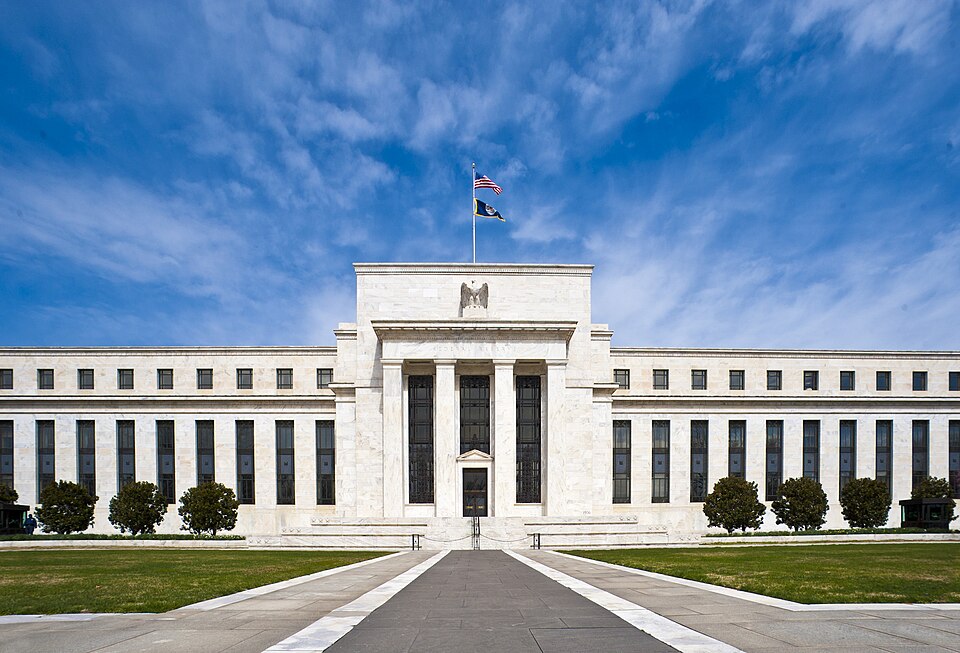
The Fed raises rates for the first time since 2023
A unanimous committee under its new chair lifted the target range to 3.75 to 4 percent on September 16, and sixteen of eighteen officials see at least one more step by the end of the year.
What the Fed did
The Federal Open Market Committee raised the target range for the federal funds rate to 3.75 to 4 percent on September 16, by a vote of 12 to 0. The federal funds rate is the rate banks charge each other for overnight money, and the rest of the economy's borrowing costs key off it. [1]
CNBC's headline called it the Fed's first increase since 2023. UPI reported the vote as unanimous and the step as a quarter of a percentage point. [4, 3]
Why, in the committee's own words
The statement said that economic activity is expanding at a solid pace, with resilient domestic spending, strong productivity growth and robust capital investment, and that job gains have kept pace with the workforce while the unemployment rate has changed little. [1]
On prices it said only that inflation remains elevated, and that the day's action will support a timelier return to the committee's 2 percent goal. The committee also said it is continuing its policy of maintaining ample reserves in the banking system. [1]
What the committee expects next
In the projections released with the decision, the median official sees the federal funds rate at 4.1 percent at the end of 2026 and of 2027, 3.9 percent at the end of 2028, and 3.2 percent in the longer run. Of the eighteen participants, twelve put the end of 2026 at 4.125 percent and four at 4.375 percent, so sixteen see at least one more quarter-point step this year. [2]
The same projections put inflation, measured by the PCE index, at 3.7 percent for 2026 and 2.3 percent for 2027, with core inflation at 3.4 percent and 2.5 percent. They put real GDP growth at 2.3 percent this year and 2.4 percent next, and unemployment at 4.1 percent in both years. [2]
The chair's frame
Chair Kevin Warsh set out his reading in Jackson Hole last month, as UPI recalled in its report: the responsibility for 65 months of sustained, elevated inflation sits squarely with the central bank, which must make sure underlying inflation is moving to its objective clearly and at sufficient speed. [3]
UPI put the decision against the month's prices: consumer inflation ran 3.4 percent year over year in August, and with a Saudi pipeline outage and failed Iran talks it reported Brent crude at 107 dollars a barrel and gasoline at an average of 4.36 dollars a gallon. [3]
Who it reaches
No company is named in the decision, so every company on the desk's list is adjacent. Banks such as JPMorgan and Bank of America earn a margin between what they pay on deposits and what they charge on loans, and both sides move with the federal funds rate the committee just raised. A broker like Charles Schwab earns interest on the cash its clients keep with it. Homebuilders such as Lennar and D.R. Horton sell into a market where mortgage rates follow the policy rate. [1]
Sources
- Federal Reserve Board, FOMC statement, 16 September 2026, 2026-09-16
- Federal Reserve Board, Summary of Economic Projections, 16 September 2026, 2026-09-16
- UPI, Joe Fisher and Jill Keppeler, Federal Reserve announces interest rate decision, 16 September 2026, 2026-09-16
- CNBC, Fed meeting recap: Warsh says inflation is still too high as Fed hikes for the first time since 2023, 16 September 2026, 2026-09-16
Every stock is a company; the desk grades the company behind the stock. This article describes; it does not recommend. Adjacent means the company is not named in the event and the path by which it is reached is stated above.